
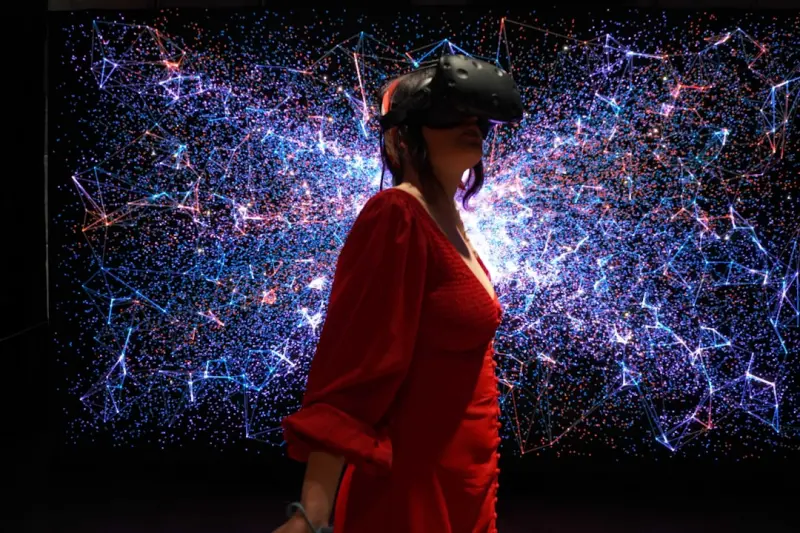
The Immersive Wave: Why Brands Must Ride AR, VR, and Live Interactivity
Content is no longer a static page you scroll through; it has become a living environment where users expect to touch, move, and converse. Immersive experiences—from augmented reality (AR) lenses that overlay product information on a coffee table to virtual reality (VR) showrooms that let shoppers walk through a digital boutique—are reshaping the way audiences discover and engage with brands. This shift is driven by the convergence of faster networks, affordable hardware, and a cultural hunger for novelty that turns consumption into participation.
AR Filters: Turning Social Moments into Brand Moments
Every day, millions of users launch a camera app, add a playful filter, and share the result with friends, creating a ripple of organic exposure. Brands that design custom AR lenses tap into this loop, turning a simple selfie into a miniature ad that feels personal and fun. The magic lies in the low barrier to entry—users don’t need to download an app, they just click a link and the filter appears, delivering a brand‑centric experience that is both memorable and measurable.
VR Showrooms: From Click‑Throughs to Walk‑Throughs
Imagine a potential buyer putting on a headset and stepping inside a fully rendered version of a new car, exploring every curve, opening doors, and hearing the engine roar—all from their living room. This level of immersion bridges the gap between online browsing and in‑store testing, reducing purchase hesitation and boosting conversion rates. Companies that invest in VR content are not merely showcasing products; they are crafting a narrative space where the consumer becomes the protagonist of the brand story.
Live Interactive Streams: Shopping Meets Community
Live streaming has evolved beyond simple product demos; it now incorporates real‑time polls, clickable overlays, and instant checkout links, turning a broadcast into a shopping aisle that reacts to audience input. Viewers can ask questions, vote on color choices, or even co‑design a limited‑edition item on the spot, creating a sense of ownership that static pages can’t match. This hybrid of entertainment and commerce blurs the line between content creator and consumer, fostering loyalty through shared experiences.
AI‑Powered Personalization Inside Immersive Layers
Artificial intelligence is the engine that powers hyper‑personalized immersive journeys, analyzing user behavior to serve the right AR filter, the most relevant VR scenario, or a tailored live‑stream offer at the perfect moment. By feeding real‑time data into the immersive pipeline, brands can adapt visuals, soundscapes, and interactive prompts to match each individual’s preferences, dramatically increasing relevance and dwell time. When AI meets immersion, the result is a content ecosystem that feels handcrafted for every viewer.
Metrics That Matter: Measuring the Unmeasurable?
Traditional KPIs like page views and bounce rate lose meaning in a three‑dimensional environment; marketers must adopt new metrics such as dwell depth, interaction heatmaps, and conversion latency within AR/VR sessions. Tools that capture gaze tracking, gesture frequency, and in‑experience purchases provide a granular view of user intent, enabling data‑driven refinements. While the learning curve is steep, the payoff lies in unlocking insights that reveal exactly how immersive content moves the needle on brand equity and revenue.
Technical Foundations: WebXR, 5G, and the Cloud
Delivering smooth, high‑fidelity immersive experiences at scale requires a robust tech stack—WebXR APIs for cross‑platform compatibility, edge‑computing to minimize latency, and 5G networks that handle the data intensity of real‑time 3D rendering. Cloud services now offer on‑demand GPU power, allowing brands to stream complex scenes without requiring users to own high‑end hardware. Investing in these foundational technologies ensures that immersive content remains accessible and performant across devices.
Strategic Roadmap: Start Small, Scale Smart
Brands should begin with low‑commitment experiments, such as a seasonal AR filter or a short VR teaser, to gauge audience reaction and gather performance data. Insights from these pilots can inform a broader rollout, integrating immersive touchpoints into the overall content calendar. Leveraging predictive content calendars helps align immersive releases with peak engagement windows, while maintaining consistency across channels. As the ecosystem matures, a phased approach—starting with AR, expanding to VR, then incorporating live interactive streams—allows teams to build expertise without overwhelming resources.
The Future Is Already Here: Embrace the Experience Economy
In an era where consumers crave participation over passive consumption, immersive content is the natural evolution of storytelling. Brands that embed AR, VR, and live interactivity into their strategy will not only capture attention but also cultivate deeper emotional connections that translate into loyalty and advocacy. The journey may require new skills, tools, and mindsets, but the reward is a dynamic, future‑ready presence that resonates in the experience economy. Ready to step beyond the screen? The next wave of content is waiting to be explored.

Related Posts

Beyond the Blog: How Immersive Content Experiences Are Redefining SaaS Marketing
Immersive content—interactive calculators, personalized product tours, and multisensory storytelli... Read More

The Rise of Micro‑Video Narratives: How Short‑Form Storytelling Is Reshaping Content Strategies
Discover why micro‑video narratives are the newest content powerhouse, how to craft compelling sho... Read More

Conversational Content Hubs: The Next Frontier for B2B Engagement
Learn why conversational content hubs are reshaping B2B marketing, how to build them using knowledge... Read More
Top Posts

The Evolution of Content Marketing: Strategies for Success in 2024
The content marketing landscape is evolving rapidly. Stay ahead of the curve by prioritizing high-quality content, technical SEO, and social media strategy to d...Read More

Gamified Link Building: Turning Competition into High‑Quality Backlinks
Explore a fresh, competition‑driven approach to link building that leverages gamification, community partnerships, and user‑generated content for sustainabl...Read More

Edge‑First Technical SEO: Turning Latency into Rankings
Edge computing isn’t just a performance upgrade; it’s a game‑changer for technical SEO. This guide shows how to audit, implement, and monitor edge strateg...Read More

The Social Media Strategy Playbook Every Marketer Needs in 2024
Brad Hays reveals a 2024 social media roadmap that blends data‑driven insights, community engagement, and paid tactics, ensuring brands stay ahead of algorith...Read More
0 Comments
Post Comment
You will need to Login or Register to comment on this post!