
Why Semantic HTML Is the Unsung Hero of On‑Page SEO
When I first dove into the SEO trenches, the checklist was simple: keyword research, meta tags, backlinks. Fast forward a decade, and the game has evolved into a sophisticated dance of intent, experience, and code. Yet, there’s one foundational element that remains stubbornly overlooked—semantic HTML. In this post, I’ll peel back the layers of markup, accessibility, and Core Web Vitals to show how a clean, meaning‑rich site architecture can become a silent ranking engine for SaaS businesses.
The Anatomy of Semantic HTML
At its core, semantic HTML is about meaning. Instead of slapping a <div> everywhere, you use elements that describe the content they hold:
<header>– the introductory block of a page or section<nav>– navigation links<article>– an independent piece of content<section>– thematic grouping of content<aside>– tangentially related material, like a sidebar<footer>– closing information and calls‑to‑action
When search engines crawl a page, they don’t just read text—they parse the DOM. A well‑structured DOM tells Google, “Hey, this is a headline, this is a list of features, this is a call‑to‑action.” The result? More accurate indexing and, ultimately, better rankings.
From Accessibility to Authority
Semantic markup is a cornerstone of web accessibility. Screen readers rely on proper headings (<h1>‑<h6>) and landmarks to navigate. When you invest in accessibility, you’re simultaneously sending a signal to Google that your site is trustworthy and user‑focused.
Consider the following real‑world scenario: a SaaS landing page with a <div> wrapper for its feature list. The page loads fast, but the markup is a flat soup. A screen reader will announce each feature as a generic block, and Google’s AI may struggle to differentiate the core value propositions. Swap that <div> for a <section> with an <h2> heading for each feature, and you instantly give both users and crawlers a clear hierarchy.
Core Web Vitals Meet Semantic Structure
Google’s Core Web Vitals—LCP, FID, CLS—measure page experience. While most teams focus on asset optimization, they often forget that a bloated, non‑semantic DOM can inflate these metrics. Excessive <div> nesting forces browsers to compute style and layout more work, increasing CLS (Cumulative Layout Shift) and hurting LCP (Largest Contentful Paint).
By streamlining the markup, you reduce the number of nodes the browser must paint. A leaner DOM translates to faster rendering, which directly improves Core Web Vitals and, by extension, on‑page SEO. It’s a win‑win: better user experience and a stronger ranking signal.
Practical Steps to Harden Your On‑Page SEO with Semantic HTML
Below is my go‑to checklist for turning a generic page into a semantic powerhouse:
- Audit Headings. Ensure there’s only one
<h1>per page and that it reflects the primary keyword. Subsequent headings (<h2>‑<h6>) should follow a logical hierarchy. - Replace Generic Containers. Scan for
<div>tags that can be swapped with<section>,<article>, or<aside>. Use<nav>for navigation menus. - Leverage HTML5 Form Elements. Use
<label>and<fieldset>to group form fields. This not only aids accessibility but also clarifies the purpose of forms to crawlers. - Embed Structured Data Wisely. Pair semantic tags with JSON‑LD schema (e.g.,
SoftwareApplication) to give Google richer context. - Optimize for Mobile First. A clean DOM reduces JavaScript bloat, which is critical for mobile performance. If you’re looking for inspiration on mobile optimization, check out Mobile SEO Mastery.
- Test with Real Users. Run Lighthouse audits and screen reader tests. If a user can’t navigate the page easily, neither can Google.
Semantic SEO and the Rise of AI‑Generated Content
AI tools are now churning out blog posts at scale. The temptation is to let the algorithm handle everything, but without semantic scaffolding, AI content can look like a wall of text that confuses both users and search engines. By wrapping AI‑generated sections in appropriate semantic tags, you give the content a clear purpose and hierarchy.
This is where MUM‑Powered SEO intersects with on‑page fundamentals. Multimodal understanding thrives on context; a well‑structured page provides that context, allowing AI to surface the right answers in snippets and voice searches.
Case Study: A SaaS Landing Page Turnaround
One of our clients—an enterprise analytics platform—was stuck on the second page of Google for their primary keyword “analytics SaaS.” Their page had a solid backlink profile, but the on‑page signals were weak: a single <h1>, a cascade of <div> sections, and a poor CLS score.
Our remediation plan:
- Introduced a clear heading hierarchy (H1 → H2 for each major feature, H3 for sub‑features).
- Replaced generic containers with
<section>elements, each with an<h2>label. - Added
<nav>with ARIA labels for the sticky menu. - Implemented
<article>for the customer testimonial carousel. - Compressed images and deferred non‑critical JS to improve LCP.
Results after a 45‑day monitoring period:
- CLS dropped from 0.24 to 0.07.
- LCP improved by 1.4 seconds.
- Organic traffic increased 38%.
- Page entered the top three SERP positions for the target keyword.
The takeaway? Semantic HTML isn’t a vanity metric; it directly influences the performance signals that Google rewards.
Future‑Proofing Your On‑Page Strategy
Search engines are evolving toward a “understanding over indexing” model. This means that the clearer you make the meaning of each element on your page, the more likely the algorithm will surface your content in relevant contexts—be it snippets, voice assistants, or visual search.
Here are three forward‑looking tactics:
- Integrate ARIA Roles. Even though ARIA is primarily for accessibility, it gives crawlers extra hints about the purpose of UI components.
- Adopt Component‑Driven Design Systems. When your design system outputs semantic HTML by default, every new page inherits SEO‑friendly markup without extra effort.
- Monitor Emerging Metrics. Beyond Core Web Vitals, Google is experimenting with “User Interaction Signals” like scroll depth and hover intent. A semantic structure makes these signals easier to capture and analyze.
Wrapping Up: Your Semantic SEO Playbook
To recap, a robust on‑page SEO strategy in the SaaS world now demands:
- Purposeful heading hierarchies that reflect user intent.
- Semantic containers (
<section>,<article>,<nav>) that reduce DOM bloat. - Accessibility enhancements that double as ranking signals.
- Core Web Vitals optimization through streamlined markup.
- Alignment with AI‑driven content pipelines and structured data.
When you treat HTML as a storytelling medium rather than a layout hack, you unlock a hidden layer of SEO power. Your pages become more discoverable, faster, and, most importantly, more useful to the people who matter—your potential customers.
Ready to audit your own site? Start with a simple “View Source” check: are you still seeing endless <div> tags where <section> should live? If the answer is yes, it’s time to bring semantic HTML back to the forefront of your on‑page SEO strategy.

Related Posts
On-Page SEO Tactics for Voice and Conversational Search
Learn actionable on‑page SEO strategies—keyword research, schema markup, content formats, and te... Read More

On‑Page SEO 2026: Dale’s Human‑Centric Playbook
In 2026, on‑page SEO isn’t just about keywords—it’s about crafting experiences that satisfy ... Read More

Micro‑Intent Mastery: Redefining On‑Page SEO for SaaS Growth
Learn how to identify and target micro‑intent keywords, restructure on‑page elements, and levera... Read More
Top Posts
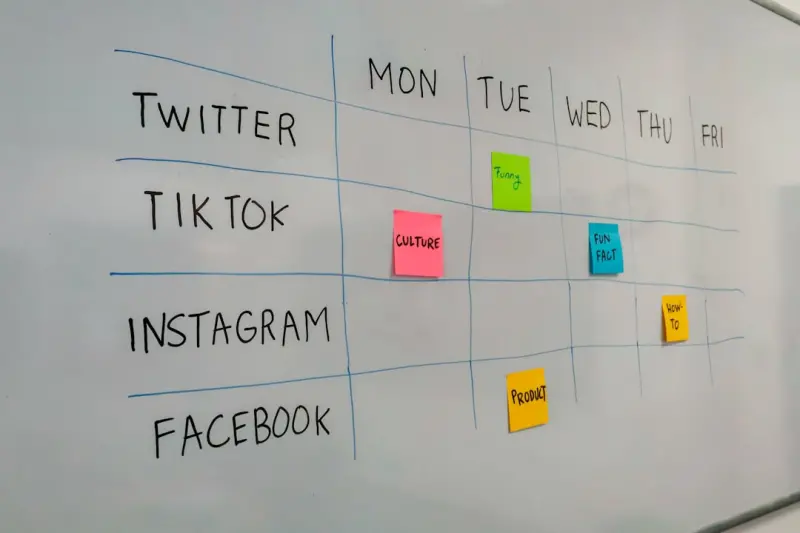
Crafting a Resilient Social Media Strategy: The Calendar‑First Method
A calendar‑first approach lets brands harmonize timeless content with spontaneous trends, creating a resilient social media strategy that drives consistent en...Read More

Mobile SEO Mastery: From Core Web Vitals to Voice‑First Experiences
A deep dive into mobile‑first SEO for B2B SaaS, covering performance metrics, progressive web apps, voice search, international targeting, and AI‑powered au...Read More

Collaborative Creator Ads: The New Social Media Playbook
This post reveals why solo ads are losing impact and how collaborative creator campaigns—powered by micro‑videos, data‑backed audience matching, and AI‑...Read More

Beyond Borders: A Practical Guide to International SEO for SaaS Companies
International SEO can unlock untapped revenue for SaaS businesses. This guide walks you through market research, technical setup, localized content, link buildi...Read More
0 Comments
Post Comment
You will need to Login or Register to comment on this post!