
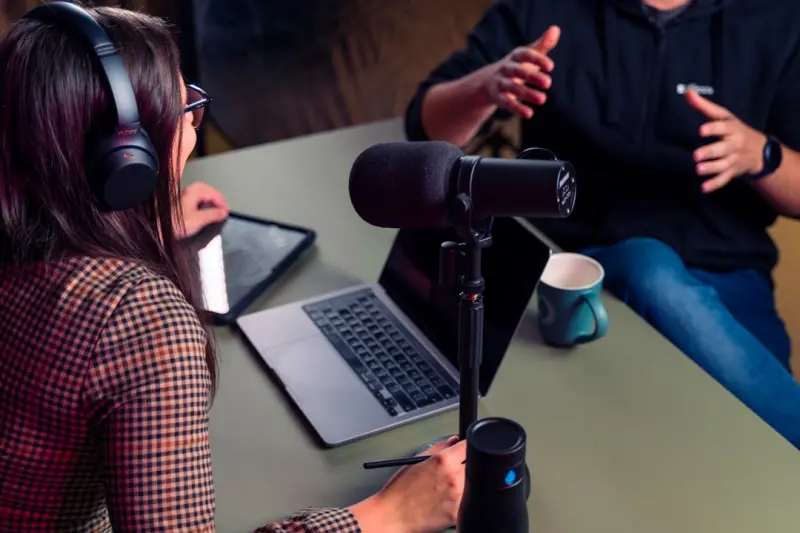
When most marketers still think of content as a series of blog posts, whitepapers, and webinars, the market is already speaking louder—literally. The surge of smart speakers, the mainstream acceptance of podcasts, and the rise of voice‑first search are converging into a single, unmistakable trend: audio is no longer a side channel; it’s becoming a primary gateway to B2B conversations. In this piece, I’ll walk you through why you should put a microphone in front of your brand, how to craft a podcast that actually moves the needle, and the technical levers you need to pull to make sure your voice gets discovered.
Why Audio Is the New Frontier for B2B Content
It’s easy to assume that podcasts belong in the consumer space—think true‑crime or lifestyle shows. But the data says otherwise. Recent studies show that over 60% of senior decision‑makers listen to at least one podcast a week, and the average listening session lasts more than 30 minutes. This isn’t idle background noise; it’s a dedicated learning window where prospects absorb complex ideas, evaluate vendors, and even form buying intentions.
Beyond sheer consumption, audio offers two strategic advantages that text‑only formats simply can’t match:
- Multi‑tasking friendliness. Professionals can listen while commuting, exercising, or reviewing documents, expanding the amount of time your brand occupies their day.
- Human connection. The tone, cadence, and personality in a voice clip create an intimacy that a written line of copy struggles to replicate.
Combine these with the fact that voice search queries are projected to outpace typed searches within the next few years, and you have a compelling reason to weave audio into every layer of your content ecosystem.
The Voice Search Wave: From “Hey Siri” to “Hey Buyer”
Smart speakers and mobile assistants have shifted the SEO landscape from keyword strings to conversational intent. A search for “best CRM for SaaS startups” becomes “what’s the best CRM for a SaaS startup like mine?” The difference matters because the algorithm now rewards content that answers natural, question‑based queries—audio content is uniquely positioned to do just that.
To get ahead, treat your audio assets as voice‑search landing pages. When you publish a podcast episode, include a well‑structured show note page that answers the episode’s core question in plain language, uses schema markup for PodcastEpisode, and provides timestamps that Google can surface as rich results. Think of each episode as a micro‑site for a specific search intent.
Designing a Podcast That Drives Leads, Not Just Listens
Many brands launch a podcast for the sake of “thought leadership” and then wonder why the download numbers aren’t translating into pipeline growth. The missing piece is a clear content‑to‑conversion framework. Here’s a simple three‑step approach:
- Identify high‑value topics. Mine your sales enablement data, support tickets, and community forums to surface the questions that cost you the most in sales cycles.
- Structure episodes as problem‑solution narratives. Begin with a pain point, dive deep with an expert guest or case study, and finish with actionable next steps that naturally segue into a call‑to‑action (CTA) for a demo or downloadable resource.
- Embed conversion triggers. Use trackable landing pages, unique UTM parameters, and QR codes that appear on the episode’s visual assets. Even a simple “listen to the full interview and claim a free assessment” can bridge the gap between awareness and intent.
When you tie each episode back to a measurable goal, your podcast becomes a repeatable lead‑generation engine rather than a vanity project.
Optimizing Your Audio for Search Engines
Just because you’ve recorded a compelling conversation doesn’t mean Google will find it. Below are the technical levers you must flip:
- Transcriptions. Publish a full, searchable transcript on the episode page. Not only does this improve SEO, it also makes the content accessible to non‑speakers and helps with compliance.
- Schema markup. Implement
PodcastSeriesandPodcastEpisodeJSON‑LD. This signals to search engines the nature of the content and increases the chance of appearing in the “Podcast” rich snippet. - Audio sitemaps. Create an
audio.xmlsitemap that lists each MP3 file, its duration, and its corresponding page URL. Submit it via Google Search Console for faster indexing. - Keyword‑rich titles and descriptions. While you want to keep titles natural for listeners, include the primary query phrase early in both the episode title and the meta description.
If you’re already experimenting with AI‑human collaboration for scalable content, you’ll appreciate how tools like speech‑to‑text APIs can automate transcriptions, allowing you to focus on the strategic layers instead of the manual grunt work. Check out this deep dive on AI‑human collaboration for scalable content for more ideas on automating the behind‑the‑scenes workflow.
Repurposing Audio Across the Content Funnel
Audio is a goldmine for multi‑format repurposing. Here’s how to extract maximum mileage from a single episode:
- Clips for social media. Pull 30‑second soundbites that highlight a provocative quote or a data point. Pair them with a caption and a static visual for LinkedIn or Twitter.
- Blog posts. Turn the episode outline into a long‑form article, embedding the transcript as a collapsible accordion. This satisfies both readers and listeners while doubling SEO value.
- Slide decks. Convert the discussion flow into a slide deck for webinars or sales enablement decks. The visual reinforcement helps retention and gives sales reps a ready‑made resource.
- Email newsletters. Include a “listen now” snippet in your drip campaigns. A short audio teaser can boost click‑through rates compared to plain text.
By treating each piece of audio as a seed for multiple content assets, you build a living content garden that continually feeds the funnel.
Measuring Success: From Downloads to Revenue Impact
Traditional podcast metrics—downloads and subscriber counts—are useful but incomplete. To prove ROI, align your audio KPIs with revenue drivers:
| Metric | What It Reveals | How to Track |
|---|---|---|
| Episode‑to‑Landing Page Conversion Rate | How many listeners take the next step after hearing the episode | UTM‑tagged links in show notes, Google Analytics goals |
| Average Listening Duration | Engagement depth; longer listens correlate with higher intent | Podcast hosting platform analytics |
| Voice Search Visibility | Ranking for conversational queries | Search Console performance report for “audio” and “podcast” filters |
| Lead‑to‑Opportunity Ratio | Direct pipeline contribution | CRM attribution models linking form submissions to specific episodes |
When you can attribute a qualified pipeline directly to a specific episode, you have a powerful narrative to share with leadership and a clear justification for scaling the effort.
Integrating Audio Into Your Existing Content Marketing Stack
If you’re already investing heavily in blog SEO, you might wonder where audio fits. The answer: think of it as a parallel track that reinforces the same themes. For every pillar page, consider launching a companion podcast episode that dives deeper into the subject matter. This not only enriches the user experience but also creates internal linking opportunities—link the blog post to the podcast page and vice‑versa, passing link equity and dwell time signals across formats.
For teams looking to amplify distribution, you can also leverage professional networks for SEO by sharing episode clips in relevant LinkedIn groups, tagging industry influencers, and encouraging community discussion. The key is to treat audio as an extension of your content pillars rather than a silo.
Future‑Proofing: What’s Next for Audio in B2B?
While the current wave is driven by podcasts and voice assistants, the horizon holds several emerging trends that will further reshape content strategy:
- Interactive voice experiences. Brands will start building “voice‑first” micro‑applications that let prospects ask follow‑up questions in real time, creating a conversational lead‑capture flow.
- AI‑generated audio snippets. With advances in text‑to‑speech, you can auto‑create short audio summaries of blog posts, turning written content into on‑the‑go listening experiences.
- Personalized podcast feeds. Data platforms will enable dynamic playlists that adapt to a listener’s industry, role, and buying stage, delivering hyper‑relevant episodes at the right moment.
Staying ahead means building the foundational processes now—consistent publishing cadence, SEO‑ready show notes, and robust measurement—so you can plug into these innovations without reinventing the wheel.
Action Checklist: Launch Your Audio Strategy in 30 Days
- Audit existing high‑performing content for audio potential.
- Identify 3‑5 topics that align with the top pain points in your sales funnel.
- Secure a host and at least one industry guest per episode.
- Set up a podcast hosting platform that offers transcriptions and analytics.
- Produce show notes with a clear CTA and schema markup.
- Publish the episode, promote via email, LinkedIn, and community channels.
- Track the KPI table above for the first 4 weeks.
- Iterate: double down on topics and formats that show the highest lead conversion.
By following this roadmap, you’ll transform a single audio experiment into a sustainable, revenue‑generating pillar of your content marketing mix.

Related Posts

AI‑Powered Modular Content: Building Reusable Assets for Omnichannel Success
Learn why modular content, powered by AI, is the future of marketing—create reusable micro‑asset... Read More

Conversational AI: The Hidden Engine Driving Modern SaaS Content Marketing
Embedding chatbots, voice assistants, and generative AI into your content strategy turns passive rea... Read More

From Broadcast to Conversation: Building a Living Content Ecosystem
Learn how to turn passive readers into active contributors, creating a dynamic content library that ... Read More
Top Posts

The On‑Page SEO Playbook for SaaS: Aligning Intent, Structure & Speed
This post reveals a SaaS‑focused on‑page SEO framework that merges user intent, semantic markup, speed optimization, and conversion‑oriented copy, providi...Read More
Harnessing HTTP/2 & HTTP/3 for a Technical SEO Edge
Discover why upgrading to HTTP/2 and HTTP/3 can dramatically improve crawl efficiency, page speed, and search rankings, plus a step‑by‑step checklist for im...Read More

Human‑Centric WordPress SEO: Turning Empathy into Rankings
Learn how to turn your WordPress site into a reader‑first powerhouse using empathy‑driven SEO tactics—from keyword research to technical tweaks—so both ...Read More

Why Creative Optimization Matters More Than Ever
Why Creative Optimization Matters More Than Ever Paid social is a relentless marathon. One day your carousel ad is generating a flood of qualified leads, and th...Read More
0 Comments
Post Comment
You will need to Login or Register to comment on this post!