
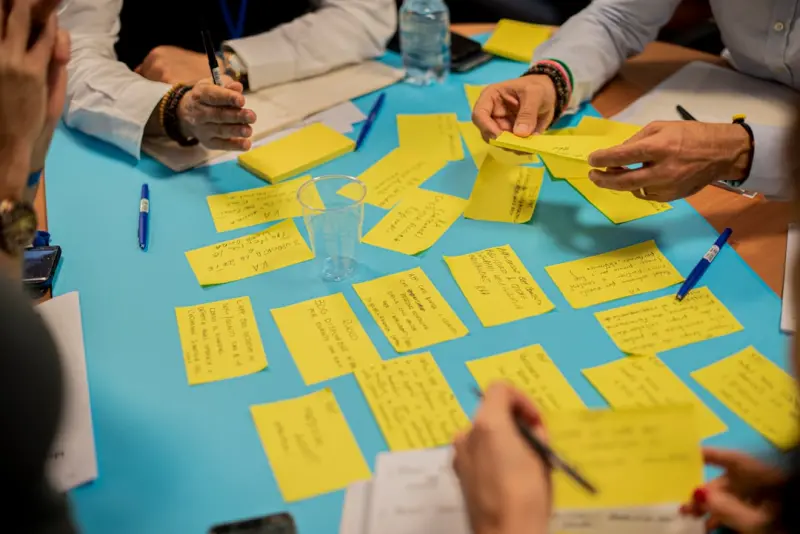
In a world where attention spans shrink faster than a trending meme, I’ve learned that the old “write‑once‑publish‑and‑pray” routine simply can’t keep up with audience demands. My own shift from marathon‑style drafting to bite‑sized, high‑velocity production was sparked by the frustration of watching brilliant ideas collect dust while the next wave of content roared past. That realization nudged me toward an approach that treats each piece of content like a sprint‑ready user story, and you can see the contrast when you compare it with the more traditional Blueprint for Content Creators that focuses on long‑term narrative scaffolding.
Why Traditional Content Workflows Fall Short
Legacy content pipelines often rely on linear hand‑offs—research to writer to editor to designer—creating bottlenecks that stall momentum and erode relevance by the time a piece finally goes live. The rigidity of this cascade ignores the reality that market signals, keyword trends, and audience sentiment can pivot within days, leaving static plans obsolete before they’re even executed. By clinging to these antiquated stages, many creators sacrifice the agility needed to seize fleeting opportunities that could otherwise fuel viral growth.
Adopting an Agile Mindset
Embracing agile means swapping exhaustive briefings for lightweight, outcome‑focused “epics” that define the core value a piece should deliver, while leaving room for iterative improvement. I start every new content initiative by asking, “What single insight will move the needle for our audience?” and then break that answer into a handful of testable hypotheses that can be validated within a single sprint cycle. This mindset shift turns uncertainty into a series of manageable experiments, allowing creativity to flourish without the paralysis of perfectionism.
Sprinting Your Ideas: From Concept to Draft
In practice, a two‑week sprint begins with a rapid brainstorming session where ideas are scored against impact, effort, and alignment, then the top three move straight into a “definition of done” that includes headline, key points, and a visual hook. Writers receive a concise canvas—just 300‑500 words of core copy—to flesh out, knowing that refinements will happen later during the review loop. The result is a draft that captures the essence quickly, enabling the team to gather early feedback and iterate before the content loses its timeliness.
Kanban Boards for Visualizing Progress
To keep the flow transparent, I set up a simple Kanban board with columns labeled “Backlog,” “In Sprint,” “Review,” and “Ready to Publish,” moving each card as work progresses. This visual cue does more than track status; it surfaces hidden capacity constraints, highlights stalled tasks, and empowers every stakeholder to self‑assign work based on current priorities. When the board is alive and updated in real time, the whole crew can spot bottlenecks and re‑balance effort without a formal meeting.
Continuous Feedback Loops with Audiences
Agile content thrives on rapid, data‑driven feedback, so I embed micro‑surveys, comment prompts, and social listening hooks directly into drafts to capture audience reactions as soon as the first version lands. By monitoring metrics like scroll depth, click‑through rates, and sentiment within the first 24‑48 hours, we can decide whether to double‑down on a theme or pivot before the next sprint begins. This loop transforms readers from passive consumers into active co‑creators, ensuring the final product resonates deeply.
Measuring Success in Real Time
Instead of waiting for a monthly analytics report, I set up real‑time dashboards that surface key performance indicators—organic traffic, engagement time, and conversion lift—right after publication. When a piece underperforms, the team can launch a quick “mini‑sprint” to tweak headlines, add visual elements, or repurpose the core message for another channel, turning a missed opportunity into a learning moment. This continuous measurement culture reinforces the agile principle of delivering value incrementally and constantly improving.
Scaling Agile Across Teams
To embed this methodology organization‑wide, I run short “agile bootcamps” where cross‑functional teams practice sprint planning, stand‑ups, and retrospectives on a real piece of content, reinforcing the rhythm of rapid iteration. Over time, the cadence becomes second nature, and even larger campaigns can be broken down into synchronized micro‑sprints that maintain cohesion while preserving speed. The payoff is a resilient content engine that can adapt to market shifts, algorithm updates, and emerging platforms without missing a beat.
Final Thoughts: Making Agile a Habit
The transition to agile content creation isn’t a one‑off project; it’s a cultural shift that rewards curiosity, experimentation, and swift adaptation. By treating each story as a living sprint, visualizing work with Kanban, and listening to audience feedback in real time, creators can produce higher‑quality pieces that hit the sweet spot of relevance and impact. In my experience, the moment you let go of the myth of perfect polish and embrace the power of iterative polish, you unlock a sustainable engine that consistently fuels growth.

Related Posts

Modular Content Architecture: Building Reusable Blocks for Scalable SaaS Storytelling
Learn how treating content as reusable “blocks” can streamline creation, personalize experiences... Read More

The Art of Dynamic Content Pipelines for SaaS Teams
A fresh approach to SaaS content creation: modular narratives, smart automation, and micro‑content... Read More

Turning Everyday Moments into Magnetic Content: A Creator’s Playbook
A practical playbook that blends narrative engines, living personas, audio storytelling, and interac... Read More
Top Posts

Turning Content Creation into a Real‑Time Experiment Lab
Discover a lab‑style approach to SaaS content creation that leverages data pipelines, modular blocks, and AI personalization to turn every piece of content in...Read More
Content Creation in the Age of AI: Strategies to Stay Ahead
Content creation in the age of AI requires a strategic approach. Learn how to adapt to changing trends, optimize your content for search engines, and drive resu...Read More

Decoding Google’s 2024 Algorithm: A Human‑Centric Playbook for Marketers
A deep dive into Google’s 2024 algorithm update, offering human‑centric SEO strategies, technical insights, and link‑building advice to boost rankings and...Read More

The Rise of Social Audio Advertising: Turning Voices into Leads
Social audio is emerging as a powerful, privacy‑friendly advertising channel. This post walks through platform options, creative tactics, measurement, and a 3...Read More
0 Comments
Post Comment
You will need to Login or Register to comment on this post!