
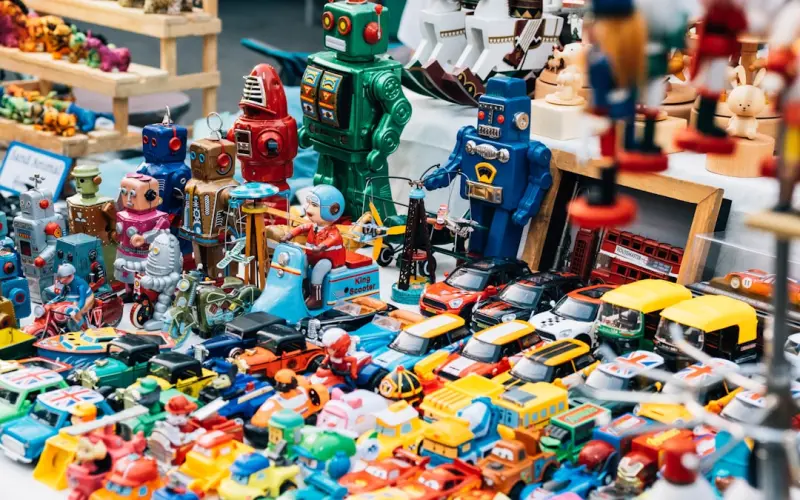
Why AI‑Powered Toys Are Redefining Playtime
When I first walked into a boutique toy store, I expected to see rows of plush bears, plastic cars, and the occasional wooden puzzle. What greeted me instead was a shelf of sleek, glowing devices that seemed more at home in a tech startup than a child’s bedroom. As someone who spends most of his days dissecting SaaS growth hacks, I couldn’t help but draw parallels between the rapid evolution of cloud platforms and the emergent world of AI‑driven toys. The convergence isn’t accidental; it’s a deliberate marriage of data, personalization, and engagement that promises to reshape how kids learn, explore, and even socialize.
The Data Engine Under the Hood
At the core of every intelligent toy lies a modest data engine. Sensors collect information about a child’s voice tone, movement patterns, and interaction speed. This data is then processed locally—or in the cloud—to adapt the toy’s responses in real time. Think of it as a miniature version of the Co‑Creating Data Assets playbook, except the “assets” are a child’s developmental milestones. By treating each interaction as a data point, manufacturers can fine‑tune behavior, recommend new content, and even forecast the next feature update before the child asks for it.
Personalized Learning Paths, Not One‑Size‑Fits‑All
Traditional toys assume a universal learning curve. A building block set, for instance, is expected to teach spatial reasoning to every child in the same way. AI‑enabled toys break that mold. They monitor how quickly a child assembles a tower, the language they use to describe it, and the level of frustration they exhibit. Based on these signals, the toy can suggest a slightly more challenging design, introduce a new color palette, or offer encouragement in the child’s own words. This dynamic scaffolding mirrors the adaptive content strategies we champion in SaaS, where a platform serves the right feature to the right user at the right moment.
Building Trust: Safety and Privacy in a Connected Playroom
Parents naturally worry about data collection, especially when it involves their kids. Reputable manufacturers are responding with transparent privacy policies, end‑to‑end encryption, and on‑device processing that minimizes data transmission. The industry’s shift toward “privacy‑by‑design” mirrors the compliance frameworks we adopt for enterprise software—think GDPR, CCPA, and the growing emphasis on data minimization. By openly communicating how data is used and giving parents control over retention settings, brands can turn a potential pain point into a trust‑building feature.
From Standalone Gadgets to Ecosystem Play
One of the most exciting trends is the move from isolated smart toys to integrated ecosystems. A robot companion might sync with a companion app that tracks progress, offers new storylines, and even connects to a child‑friendly voice assistant. This ecosystem approach resembles the way SaaS products bundle analytics, CRM, and marketing tools to deliver a seamless experience. By creating a cohesive “play stack,” manufacturers can increase stickiness, drive recurring revenue through subscription content, and gather richer insights for future product iterations.
Monetization Models: Subscription Boxes Meet Digital Content
Physical toys have always relied on a one‑time purchase model. AI toys are challenging that paradigm with subscription‑based content drops—new story arcs, language lessons, or mini‑games delivered monthly. This mirrors the “freemium‑to‑premium” funnel we see in software, where the base product is free or low‑cost, and premium experiences are unlocked via a recurring fee. For families, the subscription feels like a curated discovery service; for companies, it provides a predictable revenue stream and a direct line to user feedback.
The Role of Interactive Design in Engagement
When a toy can respond with humor, empathy, or surprise, the child’s attention horizon expands dramatically. Interactive design principles—clear affordances, immediate feedback, and progressive challenges—are as essential in a plush robot as they are in a SaaS dashboard. Companies that treat their toys as interactive tools, rather than static objects, see higher engagement metrics. In fact, the same tactics we use for Interactive Tools as Link‑Building Powerhouses can be repurposed to boost a toy’s “time‑in‑play” and foster deeper learning outcomes.
Educational Benefits Backed by Research
Multiple studies now indicate that AI‑enhanced toys can improve language acquisition, problem‑solving abilities, and emotional intelligence. By providing contextual prompts and real‑time correction, these toys act like a patient tutor that never tires. The key is balance: technology should augment, not replace, human interaction. A well‑designed AI companion encourages the child to ask questions, experiment, and then share discoveries with parents or peers, reinforcing social bonds and reinforcing the learning loop.
Challenges and Pitfalls to Watch
- Over‑Automation: If a toy does everything for the child, it can stifle curiosity. Designers must embed moments where the child must think or act independently.
- Technical Debt: Frequent firmware updates are essential for security and feature improvements, but they can also introduce bugs. A robust update pipeline—akin to CI/CD in SaaS—mitigates this risk.
- Accessibility: Not every child has access to high‑speed internet or a compatible device. Offline functionality and inclusive design ensure the benefits are universal.
Future Trends: From AI to Augmented Reality
Looking ahead, the line between physical toys and digital experiences will blur further. Augmented reality (AR) overlays can project virtual characters onto real‑world playsets, while AI continues to personalize the narrative. Imagine a wooden train set that, through an AR headset, turns into a bustling cityscape that reacts to each train’s speed and direction. The data collected from those interactions will feed back into the AI, creating a self‑improving loop of imaginative play.
How Parents Can Choose the Right Smart Toy
1. Check Privacy Policies: Look for clear statements about data usage, storage, and deletion.
2. Assess Offline Capabilities: A toy that works without constant Wi‑Fi is more reliable and secure.
3. Read Reviews Focused on Educational Value: Look beyond “fun factor” to see if the product demonstrates measurable learning outcomes.
4. Consider Longevity: Does the ecosystem have a roadmap for new content? Will the toy receive updates?
Conclusion: The Playroom as a Living Lab
Just as SaaS companies treat their products as evolving platforms, the next generation of toys is becoming living labs—spaces where data, AI, and human imagination intersect. For parents, educators, and developers alike, the promise is clear: a more personalized, engaging, and measurable play experience that grows alongside the child. By embracing the principles of responsible data use, interactive design, and ecosystem thinking, we can ensure that AI‑powered toys become not just a novelty, but a meaningful catalyst for lifelong learning.

Related Posts

The Rise of Toy Subscription Boxes: Curated Play Delivered to Your Door
Explore how monthly toy subscription boxes blend surprise, personalization, and sustainability to re... Read More

Rediscovering Play: Why Imaginative Toys Matter More Than Ever
A deep dive into the science and joy of imaginative toys, showing how open‑ended play nurtures cre... Read More
The Hidden Psychology Behind Blind‑Box Collectibles and Their Rise in Modern Play
Blind‑box toys blend mystery, storytelling, and modern tech to spark curiosity and community, offe... Read More
Top Posts

Conversational Communities: The Next Evolution in Social Media Strategy
Learn why shifting from broadcast posts to genuine conversations on platforms like Discord and private groups fuels brand loyalty, uncovers actionable insights,...Read More

The Rise of Generative Visual Content in B2B SaaS Marketing
Generative AI is turning visual content creation into a scalable, personalized engine for B2B SaaS. Learn how to integrate AI‑generated images, videos, and 3D...Read More

Beyond the Blog: Immersive Content Strategies for SaaS Growth
Static copy is losing its grip on SaaS buyers. This post reveals how interactive quizzes, calculators, AR demos, and employee advocacy can transform your conten...Read More
Beyond Plastic: How Subscription Boxes and AR Toys Are Redefining Modern Play
Discover how curated toy subscriptions and AR‑powered playsets are transforming how kids learn, connect, and stay engaged, all while championing sustainabilit...Read More
0 Comments
Post Comment
You will need to Login or Register to comment on this post!