

Why Technical SEO Is the Backbone of SaaS Growth
When I first stepped into the world of SaaS marketing, the buzz was all about content, link building, and paid acquisition. Those levers are undeniably powerful, but I quickly discovered that without a rock‑solid technical foundation, even the most compelling copy can disappear into the abyss of the SERPs. Technical SEO isn’t a “nice‑to‑have” checklist item; it’s the plumbing that lets Google’s crawlers discover, understand, and rank your product pages, API docs, and developer resources.
In this playbook I’ll walk you through three high‑impact, often‑overlooked tactics that SaaS teams can implement today: managing crawl budget with precision, rendering JavaScript‑heavy applications for optimal indexing, and squeezing every millisecond out of edge performance. The goal isn’t to replace your existing strategy—it’s to augment it with the kind of engineering‑level rigor that turns “good enough” into “unbeatable.”
1. Mastering Crawl Budget: Make Every Crawl Count
Crawl budget is the amount of time and resources Google allocates to scanning your site. For large SaaS platforms with thousands of dynamically generated product pages, documentation, and user‑generated content, an inefficient crawl budget can mean that critical updates never get indexed.
- Audit your robots.txt and meta directives. Remove blanket
Disallow: /statements that unintentionally block valuable assets. UseAllowrules to whitelist high‑value endpoints, especially those that serve fresh feature releases or pricing changes. - Prioritize high‑value URLs with
sitemap.xml. A well‑structured sitemap tells Google where to focus. Group URLs by priority (e.g.,0.9for product landing pages,0.5for older blog posts) and keep it under 50 KB to avoid truncation. - Eliminate duplicate content at the source. SaaS platforms often generate duplicate pages via query parameters (e.g.,
?ref=campaign). Implement canonical tags or URL parameter handling in Search Console to consolidate equity. - Leverage log file analysis. By parsing server logs you can see exactly which pages Googlebot visits, how often, and where it encounters errors. Tools like Screaming Frog Log File Analyzer or open‑source solutions built on the ELK stack can surface bottlenecks in real time.
When you align your crawl budget with business priorities, you guarantee that new product features, pricing updates, and security patches surface in search faster—giving you a competitive edge.
2. Decoding JavaScript Rendering: From SPA to SEO‑Friendly
Modern SaaS applications love single‑page architectures (SPAs) built with React, Vue, or Angular. While they deliver seamless user experiences, they also pose a classic SEO dilemma: Google’s crawler must render the page to see the content, and that rendering can be resource‑intensive or incomplete.
There are three main strategies to ensure your JavaScript‑driven pages are fully indexable:
a. Server‑Side Rendering (SSR)
SSR sends a fully rendered HTML snapshot to the crawler, eliminating the need for Google to execute JavaScript. Frameworks like Next.js (React) and Nuxt.js (Vue) make SSR implementation relatively straightforward. Key considerations:
- Ensure the initial HTML contains all critical SEO elements—title, meta description, structured data.
- Maintain a consistent URL structure between SSR and client‑side navigation to avoid duplicate content.
- Use
Cache‑Controlheaders wisely; SSR pages are cacheable but need proper invalidation when content changes.
b. Dynamic Rendering
If a full SSR overhaul isn’t feasible, dynamic rendering offers a pragmatic compromise. You serve pre‑rendered HTML to crawlers while regular users receive the SPA. Services like Rendertron, Prerender.io, or Cloudflare Workers can automate this detection and delivery.
When implementing dynamic rendering, keep these rules in mind:
- Detect crawlers via
User‑Agentstrings and serve the pre‑rendered version only to them. - Never serve pre‑rendered content to human users; it defeats the purpose of the SPA.
- Regularly audit the pre‑rendered output to ensure it stays in sync with the client‑side version.
c. Hybrid Approach with Incremental Static Regeneration (ISR)
ISR, popularized by Next.js, lets you statically generate pages at build time and then refresh them on demand. This gives you the performance of static pages with the freshness of dynamic content—perfect for SaaS pricing tables or feature comparison pages that change frequently.
By combining SSR for high‑value entry points (e.g., homepage, pricing) with ISR for secondary pages (e.g., blog posts, case studies), you strike a balance between crawl efficiency and development velocity.
3. Edge Performance: The Silent Ranking Signal
Core Web Vitals have taken center stage, but even after you’ve nailed LCP, FID, and CLS, there’s another layer of performance that can tip the scales: edge delivery. By moving assets closer to the user, you reduce latency, improve perceived speed, and satisfy Google’s emphasis on user experience.
Deploying a CDN with Intelligent Caching
A global CDN (e.g., Cloudflare, Fastly, Akamai) caches static assets—JavaScript bundles, CSS, images—at edge nodes. To get the most out of it:
- Set
Cache‑Control: max‑ageheaders based on asset volatility. For versioned JS bundles, a year-long cache is safe; for API responses, a few seconds may be better. - Leverage
stale‑while‑revalidateto serve a slightly outdated asset while the CDN fetches a fresh copy, preventing “cache miss spikes.” - Enable Brotli compression for text‑based assets; it often yields 20‑30 % size reductions over gzip.
Optimizing API Responses for Search
Many SaaS platforms expose JSON‑LD structured data via API endpoints to power rich results. Ensure these APIs:
- Return HTTP 200 with proper
Content‑Type: application/ld+jsonheaders. - Include canonical URLs in the JSON‑LD
@idfield to signal the definitive page. - Are cached at the edge for short durations (e.g., 60 seconds) to balance freshness with crawl efficiency.
Edge‑Side Includes (ESI) for Personalization Without Fragmentation
Personalized content (e.g., logged‑in user dashboards) often fragments SEO signals because search bots can’t see the personalized view. ESI allows you to assemble pages at the edge: the core, indexable HTML is served to all users, while personalized fragments are injected only for authenticated sessions.
This technique keeps the SEO‑critical skeleton static and cacheable, while still delivering a tailored experience to paying customers.
4. Automated Auditing: From Manual Checks to CI/CD Integration
Technical SEO is an ongoing discipline, not a one‑off project. Embedding SEO checks into your continuous integration pipeline ensures regressions are caught early.
- Run Lighthouse CI on every PR. Fail builds that dip below your LCP threshold.
- Integrate deep content visibility checks. Ensure new pages are discoverable within your
sitemap.xmland have nonoindexaccidental tags. - Validate structured data with the Rich Results Test API. Automated scripts can flag missing required fields before deployment.
- Monitor crawl errors via the Search Console API. Set up alerts for 404 spikes after releases.
By treating SEO like any other code quality metric, you create a culture where every engineer, product manager, and marketer owns the health of your search presence.
5. Future‑Proofing: Embrace Emerging Protocols
Web standards evolve quickly. Two protocols worth watching for SaaS SEO:
HTTP/3 (QUIC)
HTTP/3 reduces latency by eliminating the TCP handshake and enabling multiplexed streams over UDP. Early adopters report up to 30 % faster page loads on mobile networks. Since page speed is still a ranking factor, enabling HTTP/3 on your CDN can give you an edge—especially for latency‑sensitive dashboards.
Web Vitals 2.0 (Web Vitals Next)
Google is expanding the Vitals suite beyond LCP, FID, and CLS to include metrics like Interaction to Next Paint (INP). Begin instrumenting these metrics now using the web-vitals library so you’re ready when they become official ranking signals.
6. Putting It All Together: A Tactical 90‑Day Roadmap
Implementing every recommendation at once is overwhelming. Here’s a pragmatic three‑phase plan:
- Week 1‑2: Crawl Budget Cleanup. Audit robots.txt, generate a fresh sitemap, and set up log file monitoring.
- Week 3‑6: Rendering Strategy. Choose between SSR, dynamic rendering, or ISR based on page importance. Deploy a pilot on the pricing page and measure indexing latency.
- Week 7‑10: Edge Performance. Configure CDN caching rules, enable Brotli, and add ESI for personalized fragments.
- Week 11‑12: Automation. Integrate Lighthouse CI, structured data validation, and Search Console alerts into your CI pipeline.
- Beyond 90 Days: Evaluate HTTP/3 support, start instrumenting new Web Vitals, and iterate based on crawl data.
Following this roadmap transforms your SaaS platform from a “search‑friendly” site into a search‑dominant engine that consistently surfaces the most valuable product pages at the right moment.
Conclusion: Technical SEO Is Your SaaS’s Secret Weapon
In the noisy world of SaaS marketing, the teams that win are the ones that treat search like a product feature, not an afterthought. By mastering crawl budget, delivering JavaScript content in an indexable way, and leveraging edge performance, you give Google a clear, fast, and trustworthy view of your platform. The payoff? Faster rankings for new releases, higher organic conversion rates, and a resilient foundation that scales as your product roadmap accelerates.
Remember: technical SEO isn’t a set‑and‑forget checklist. It’s a continuous loop of measurement, iteration, and collaboration across engineering, product, and marketing. When you embed that mindset into your SaaS culture, the search engine becomes a powerful growth engine—not just a traffic source.

Related Posts

The Future of Technical SEO: Trends to Watch
The future of technical SEO is rapidly evolving. Learn how to optimize your website for AI-driven se... Read More

Mastering Technical SEO for SaaS: From Crawl Budget to API Docs
A deep dive into the technical SEO tactics SaaS companies need—from managing crawl budget and deco... Read More

Unlocking Crawl Budget: A Technical SEO Playbook for Massive Sites
A deep dive into crawl budget optimization, log file insights, and server strategies that help huge ... Read More
Top Posts

The Secret Sauce Behind Content That Connects and Converts
Learn how to craft content that feels like a conversation, not a sales pitch, by using empathy‑driven research, storytelling frameworks, and smart SEO tactics...Read More

Human‑Centric Content Strategy: Robert Mathews’ Blueprint for 2024 Success
Robert Mathews reveals a 2024 content strategy that fuses human‑centric storytelling, SEO precision, and community engagement to future‑proof your brand’s...Read More
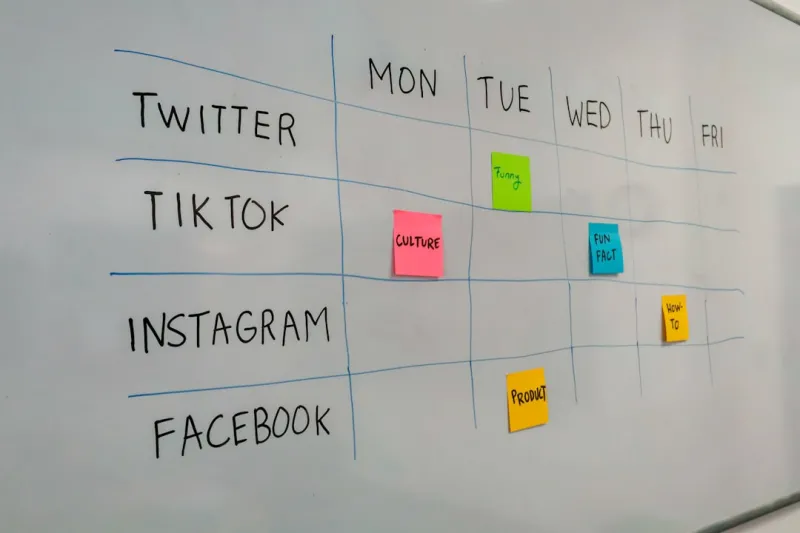
Revolutionizing Your Social Media Strategy: A Comprehensive Guide to Success
Learn how to create a comprehensive social media strategy that drives real results for your business and stay ahead of the curve in the ever-changing social med...Read More

Beyond Keywords: Designing On‑Page SEO as an Experience Blueprint
A fresh framework reimagines on‑page SEO as a design sprint, focusing on user intent, structured hierarchy, micro‑conversions, and continuous data‑driven ...Read More
0 Comments
Post Comment
You will need to Login or Register to comment on this post!