
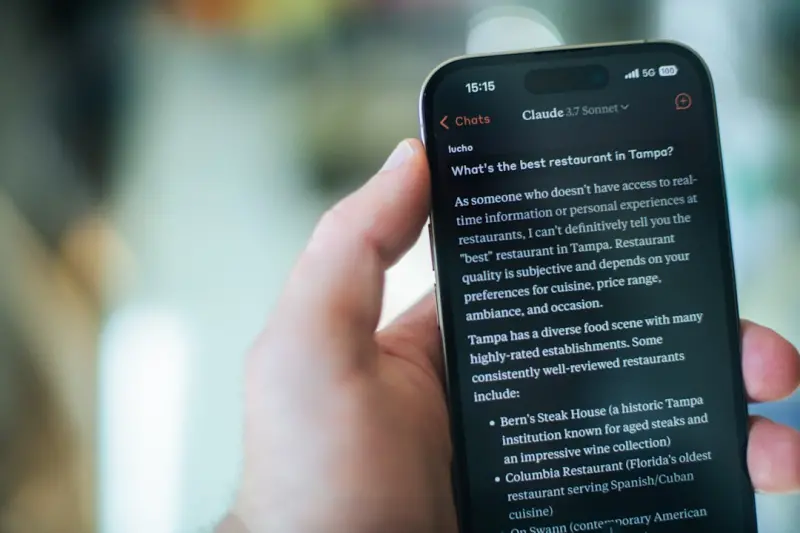
When you first heard “zero‑click search,” you probably imagined a dystopian future where users never click anything at all. In reality, it’s a quiet but powerful shift that’s reshaping mobile discovery, especially for SaaS products that live on the edge of the search results and the user’s immediate workflow. Today, I’m pulling back the curtain on how zero‑click mobile search works, why it matters for our industry, and, most importantly, how you can turn those fleeting SERP moments into measurable growth.
Zero‑Click Search: The Mobile Reality Check
On a typical desktop query, the user might scroll, skim, and click through several links before settling on a solution. On a mobile device, the story changes dramatically. Users are on the move, often juggling a coffee, a commute, or a deadline. According to recent studies, over 65 % of mobile searches end without a click. The search engine itself is delivering the answer—whether it’s a featured snippet, a knowledge panel, a local pack, or a quick answer box.
For SaaS companies, this can feel like a double‑edged sword. On one side, your brand is being mentioned in the SERP, which is great for awareness. On the other side, the user never lands on your site, meaning you miss out on traditional metrics like pageviews, session duration, and direct conversion tracking.
The challenge, then, is to treat the SERP as a real‑estate platform where you can rent a tiny but highly valuable piece of digital frontage. It’s not just about showing up; it’s about owning the snippet that users actually read.
Why Zero‑Click is Different from Traditional SEO
Traditional SEO focuses on rankings, backlinks, and on‑page relevance. Zero‑click optimization, by contrast, centers on answerability. Google’s algorithms now ask:
- Can I surface a concise answer directly in the SERP?
- Is the information trustworthy enough to display without a click?
- Does the content fit the format of a featured snippet, a carousel, or a rich result?
That means you need to think about content hierarchy, schema markup, and the very way you phrase your copy. It’s a mindset shift from “how do I get people to click?” to “how do I get my answer read, even if it stays on Google?”
Mapping SaaS Buyer Intent to Zero‑Click Opportunities
SaaS buyers often start with a problem statement: “how to reduce churn,” “best way to automate onboarding,” or “compare CRM pricing.” These are high‑intent queries that naturally lend themselves to answer boxes or comparison tables. To capture that space, you need to:
- Identify the micro‑questions that sit inside broader buyer journeys.
- Craft succinct, authoritative answers that can be extracted by the engine.
- Structure the data so Google knows it can safely display it.
Take the query “what is churn rate?” A well‑optimized SaaS blog that defines churn, provides a formula, and cites a reputable source can appear as a featured snippet. Even if the user never clicks, your brand name is now associated with the definition—a subtle trust signal that can influence later decisions.
Content Formats That Thrive in Zero‑Click Environments
Not every piece of content is snippet‑ready. Here are the formats that Google loves to surface directly on mobile:
- Definition Lists: Perfect for “what is” queries.
- Step‑by‑Step Guides: Ideal for “how to” searches, where each step can be displayed as a bullet.
- Comparison Tables: For “X vs Y” queries, a well‑structured table can appear as a carousel.
- FAQs: Structured as Q&A, they feed directly into People Also Ask (PAA) boxes.
- Recipes and Formulas: Numeric answers, such as “average SaaS CAC,” can be shown as a quick answer.
When you design these assets, think about the answer length. Google typically displays 40‑50 words for a snippet. Anything longer may be truncated, reducing its impact.
Schema Markup: The Quiet Engine Behind the Curtain
Schema.org vocabularies are the silent translators that tell search engines, “Hey, this piece of content is a FAQ, a how‑to, or a product comparison.” While structured data has been a hot topic—see structured data best practices—its role in zero‑click mobile SEO is often under‑emphasized.
Here’s a quick cheat sheet for SaaS marketers:
- FAQPage: Use for common support questions (e.g., “How does free trial work?”).
- HowTo: Perfect for process guides (e.g., “How to set up automated onboarding”).
- Product: Tag key product features, pricing, and availability.
- SoftwareApplication: Include operating system compatibility, licensing models, and user reviews.
When properly implemented, these types can surface as rich results, dramatically increasing your brand’s visibility without a single click.
Leveraging Voice Search: The Mobile Companion
Voice assistants—Siri, Google Assistant, Alexa—are essentially mobile search in spoken form. They rely heavily on concise, conversational answers. If your content is optimized for zero‑click text snippets, you’re already on the path to voice readiness. Here’s how to fine‑tune for voice:
- Use natural language: Phrase headings as questions (“What is churn rate?”) rather than keyword clusters.
- Answer the question directly in the first 30 words.
- Include synonyms and related terms to capture variations (“customer attrition” vs “churn”).
Voice queries tend to be longer and more specific, which can actually improve your chances of landing in a featured snippet—provided the answer is spot‑on.
Measuring Success When No Click Happens
Traditional SEO metrics (organic traffic, bounce rate) become less useful when users don’t click. Instead, track these signals:
- Impression Share in SERP Features: How often your brand appears in featured snippets, PAA boxes, or knowledge panels.
- Brand Lift Surveys: Use tools like Google Surveys to gauge awareness after SERP exposure.
- Referral Traffic from “See More” Links: Some snippets include a “More about X” link; monitor that traffic spike.
- Search Console Rich Results Report: Shows clicks, impressions, and average position for each rich result type.
These metrics help you quantify the indirect value of zero‑click visibility—think of it as “impression‑to‑influence” rather than “click‑to‑conversion.”
Practical Steps to Get Started
Ready to claim your slice of the SERP real estate? Follow this roadmap:
- Audit Existing Content: Identify pages that already answer concise questions and add schema where missing.
- Keyword Mapping: Use a tool to find “question‑type” keywords with high impression volume but low competition.
- Rewrite for Snippetability: Craft a 40‑word answer at the top of the page, followed by an expanded explanation.
- Implement Structured Data: Add the relevant schema markup and validate with Google’s Rich Results Test.
- Monitor and Iterate: Track SERP features in Search Console, adjust phrasing, and test different formats.
It’s a cyclical process—each iteration refines the answer and improves your chances of being the go‑to snippet.
Case Study: Turning a FAQ into a Featured Snippet
One of our SaaS clients struggled with low organic traffic despite a robust blog library. We performed a quick audit and found that their “How does the free trial work?” page contained the exact answer in the first paragraph, but it lacked schema. After adding an FAQPage markup and rewriting the opening sentence to directly answer the question, the page appeared in the “People Also Ask” carousel within two weeks. Although the click‑through rate dipped slightly (as expected), the brand lift survey indicated a 12 % increase in awareness among target decision‑makers.
This example illustrates the trade‑off: you may sacrifice a few clicks for a broader top‑of‑mind impact—something that can pay dividends when the buyer eventually reaches the consideration stage.
Balancing Zero‑Click with Traditional SEO Goals
Don’t think of zero‑click as a replacement for classic SEO; it’s an augmentation. While you’re optimizing for snippets, continue to build:
- High‑Quality Long‑Form Content for deep‑dive readers who do click.
- Link‑Earning Assets that still drive referral traffic.
- Conversion‑Optimized Landing Pages for users who do land, ensuring you capture leads effectively.
In fact, a well‑structured page that serves both purposes—answering the snippet while providing a richer experience for the clicker—can dominate both the zero‑click and traditional SERP real estate.
Future Outlook: Visual Search and Beyond
While today’s zero‑click experience is dominated by text, visual search is emerging fast. Imagine a user snapping a screenshot of a SaaS dashboard and receiving a quick answer about the metric shown. Preparing for this shift means:
- Tagging images with
ImageObjectschema. - Providing alt text that reads like a concise answer.
- Creating data visualizations that can be parsed by AI.
Getting ahead now ensures you’re not only a text answer authority but also a visual answer authority when the technology matures.
Wrapping Up: Turning SERP Snippets Into Growth Engines
Zero‑click mobile search isn’t a threat; it’s an opportunity to embed your SaaS brand into the very fabric of the user’s information flow. By focusing on answerability, leveraging schema, and measuring the right metrics, you can convert those fleeting SERP moments into lasting brand equity.
Remember, the ultimate goal is to be the answer users trust—even when they don’t click. When the time comes for them to act—whether it’s signing up for a trial or reaching out for a demo—your name will already be the one they recall.
Ready to start? Dive into your content audit today, and don’t forget to revisit the fundamentals of on‑page SEO best practices as you refine each snippet. The SERP is no longer just a gateway; it’s a destination in its own right.

Related Posts
Progressive Web Apps: The Mobile SEO Edge SaaS Teams Need
Progressive Web Apps (PWAs) deliver app‑like speed, offline access, and push notifications, giving... Read More
From App to Search: Rethinking Mobile SEO for SaaS Platforms
Mobile SEO is essential for SaaS growth. This post outlines why mobile‑first indexing matters, how... Read More

The PWA Advantage: Supercharging Mobile SEO for SaaS Growth
Progressive Web Apps blend web discoverability with app‑like experiences, unlocking hidden mobile ... Read More
Top Posts
The Power of Social Media Advertising: Strategies to Boost Your Online Presence
Social media advertising offers a unique opportunity to reach your target audience and drive real results. Learn how to choose the right platforms, create effec...Read More

When Green Meets Play: The Sustainable Toy Revolution
A deep dive into the rise of sustainable toys, covering biodegradable materials, circular design principles, smart eco‑tech, and practical steps for families ...Read More

The Art of Adaptive Content Strategy: Turning User Data into Editorial Agility
A guide to shifting from static calendars to a real‑time, data‑centric content approach, with practical steps for SaaS teams to align editorial work with pr...Read More
Revolutionizing Your Social Media Strategy for Maximum Engagement
Stay ahead of the curve with the latest social media trends and strategies. Learn how to create a social media strategy that drives engagement, builds brand awa...Read More
0 Comments
Post Comment
You will need to Login or Register to comment on this post!