
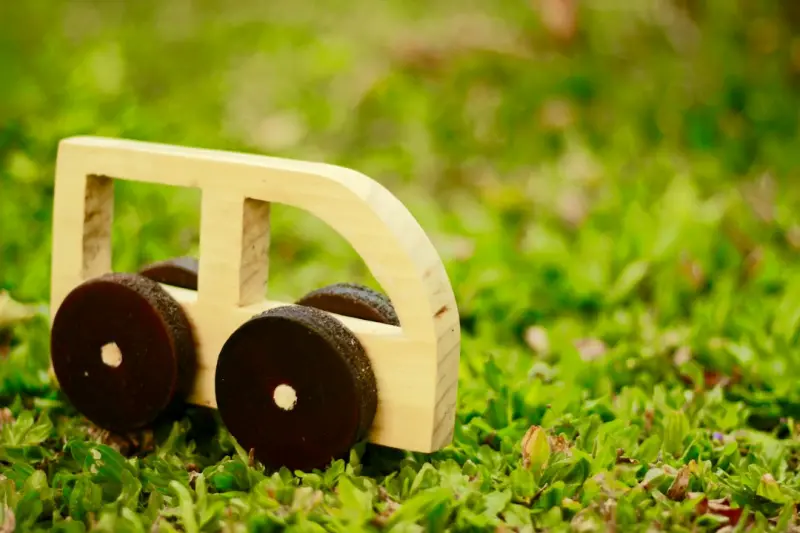
The Eco‑Conscious Playroom: Why Sustainable Toys Matter More Than Ever
When I was a kid, my favorite toys were the ones that could survive a tumble down the stairs, a splash in the bathtub, and a marathon of backyard adventures. Fast forward to today, and the conversation around toys has shifted from durability to the planet. As someone who spends my weekdays untangling SaaS pipelines and my weekends rebuilding LEGO cities, I’ve begun to see a clear parallel: the same strategic thinking that drives efficient software can—and should—drive the next wave of sustainable play.
From Plastic to Plant‑Based: The Materials Revolution
Traditional toys have long relied on petroleum‑derived plastics. Those cheap, shiny polymers are cheap to mass‑produce, but they leave a lingering footprint that takes centuries to break down. The good news? A new generation of manufacturers is swapping out acrylonitrile butadiene styrene (ABS) for renewable alternatives like biodegradable PLA, wood‑based composites, and recycled ocean plastics. The shift isn’t just about “green” branding; it’s about re‑engineering the toy’s DNA.
- Biodegradable Polymers: Derived from corn starch or sugarcane, these plastics decompose under industrial composting conditions in under a year.
- Recycled Ocean Plastic (ROP): Companies are now harvesting discarded fishing nets and bottle caps, turning them into vibrant building blocks that actually feel surprisingly tactile.
- Wood‑Based Composites: Engineered from sustainably sourced hardwoods and plant fibers, these materials offer the same snap‑fit precision as plastic while being fully recyclable.
For parents, the choice is no longer “plastic vs. wood”—it’s about selecting toys that align with a circular economy mindset.
Designing for a Circular Economy
In the SaaS world, we talk about “feedback loops” and “iterative development.” The same concepts are now being applied to the physical life cycle of toys. A circular toy ecosystem includes:
- Modular Design: Parts that can be swapped, upgraded, or repaired, extending the product’s lifespan.
- Take‑Back Programs: Brands offering prepaid shipping labels so families can return worn‑out pieces for refurbishment.
- Up‑Cycling Kits: Creative add‑ons that transform old components into new play experiences—think “DIY robot arms” made from reclaimed plastic gears.
When a child disassembles a robot and repurposes the motor for a new invention, they’re not just learning engineering; they’re living the circular model. It’s a lesson in resourcefulness that no classroom can replicate.
Playful Ethics: The Power of Storytelling
Kids love a good story, and the narrative behind a toy can be as compelling as its functionality. Brands are now weaving sustainability directly into their marketing copy, turning the act of play into a teachable moment. For example, a plush bear made from recycled polyester might come with a booklet that details the journey of a single plastic bottle—from ocean debris to cuddly companion.
These narratives serve a dual purpose: they deepen emotional attachment to the product and reinforce a mindset of stewardship. When I read a child’s bedtime story about a “recyclo‑dragon” who guards a forest of reclaimed toys, I’m reminded of the same storytelling techniques we use to humanize complex SaaS platforms.
Tech Meets Green: Smart Toys with a Conscience
While many assume “smart toys” are synonymous with “more batteries, more e‑waste,” the reality is more nuanced. Emerging startups are embedding low‑power Bluetooth chips into biodegradable housings, enabling interactive experiences without compromising eco‑credentials. A notable example is a line of plant‑powered toys that harvest sunlight during the day and use that stored energy to power simple LED displays at night.
These innovations echo the principles behind “edge computing”—processing data locally to reduce bandwidth. By processing interactions on-device, these toys minimize the need for cloud connectivity, cutting down on server energy consumption. In short, the smarter the toy, the greener the play.
Community‑Driven Innovation: Crowdsourcing Sustainable Designs
One of my favorite trends is the rise of open‑source toy design platforms. Designers upload STL files for 3D‑printable toys made from PLA, and the community iterates, improves, and shares back. It’s the physical equivalent of a public repository, complete with version control and community reviews. This democratization reduces the barrier to entry for small manufacturers, who can now produce limited runs without massive tooling costs.
These platforms also encourage “design for disassembly,” a principle that aligns with the subscription toy box model. Instead of receiving a single, monolithic product, families receive modular kits that can be mixed, matched, and eventually returned for refurbishment or recycling.
Regulatory Landscape: What Parents Should Know
Governments worldwide are tightening standards on toy safety and environmental impact. The European Union’s Eco‑Design Directive now requires a minimum percentage of recycled content for children’s products, while the United States is piloting a “Zero‑Waste Toy” certification. These regulations are not just bureaucratic hurdles; they create a level playing field that rewards truly sustainable innovators.
For savvy parents, this means an easier time vetting products: look for certifications like “ASTM F963,” “EU Ecolabel,” or the newer “Zero‑Waste Toy” badge. When you see these symbols, you can trust that the toy meets both safety and environmental benchmarks.
Practical Tips for Building a Green Toy Collection
Switching to sustainable toys doesn’t have to be an all‑or‑nothing overhaul. Here are actionable steps you can take right now:
- Audit Your Current Collection: Separate toys into “keep,” “donate,” and “recycle” piles. Look for items made of single‑material plastics that are hard to repurpose.
- Prioritize Modular Brands: Choose toys that grow with your child, reducing the need for frequent replacements.
- Support Local Makers: Small workshops often use reclaimed wood or locally sourced fabrics, cutting down on transportation emissions.
- Embrace Second‑Hand: Thrift stores and online marketplaces are treasure troves for gently used, high‑quality toys.
- Teach the Loop: Involve kids in the recycling process—show them how a plastic bottle can become a building block.
Future Outlook: What’s Next for Sustainable Play?
Looking ahead, I see three converging forces that will shape the next decade of eco‑friendly toys:
- AI‑Driven Material Discovery: Machine learning algorithms are already identifying bio‑based polymers with performance comparable to traditional plastics.
- Carbon‑Neutral Manufacturing: Solar‑powered factories and carbon‑capture technologies will become standard for high‑volume toy production.
- Play‑As‑Service Models: Building on the subscription toy box concept, brands will offer “toy as a service,” where families rent, rotate, and return toys, keeping the product in constant use and out of landfills.
When these trends mature, we’ll see a world where the phrase “I love my toys” is synonymous with “I love my planet.” It’s an optimistic vision, but one that feels increasingly attainable.
Conclusion: Play with Purpose
From my dual life in B2B SaaS and weekend LEGO construction, I’ve learned that the most successful systems are those that iterate, recycle, and stay adaptable. The same philosophy applies to the toys we bring into our homes. By choosing sustainable materials, embracing modular design, and supporting circular business models, we’re not just buying a product—we’re investing in a mindset that values longevity, creativity, and environmental stewardship.
So the next time you’re perusing the aisle for that perfect gift, ask yourself: does this toy inspire imagination, stand the test of time, and leave the planet a little better than it found it? If the answer is yes, you’ve found a winner—and you’ve just taken one more step toward a greener, more playful future.

Related Posts
The Secret Power of Subscription Toy Boxes: Turning Play into a Family Growth Engine
Explore why subscription toy boxes are more than just monthly surprises—they’re a strategic tool... Read More

Jimmy Anand’s Insider Look at the Hottest Toy Trends Shaping 2024
Jimmy Anand breaks down 2024’s must‑watch toy trends, blending tech, sustainability, and nostalg... Read More
The Evolution of Play: How Collectible Toys Are Redefining Childhood
Collectible toys are redefining childhood through play, creativity, and social connections. Learn mo... Read More
Top Posts

The Empathy‑First Playbook for Modern On‑Page SEO
Learn why integrating empathy into every on‑page element—from keywords to mobile design—delivers higher rankings and stronger user connections....Read More

Turning Search Engines into Topic Guides: A Semantic SEO Playbook for SaaS
Semantic SEO transforms SaaS content from isolated keywords into interconnected topic hubs, leveraging entity mapping, structured data, and intent‑aligned pag...Read More

Beyond the Flip: Mobile Search Intent and the New SEO Playbook
Learn why mobile search intent matters, how to map intent to content formats, leverage structured data, and measure success—turning on‑the‑go queries into...Read More
When Green Meets Play: The Sustainable Toy Revolution
A deep dive into the rise of sustainable toys, covering biodegradable materials, circular design principles, smart eco‑tech, and practical steps for families ...Read More
0 Comments
Post Comment
You will need to Login or Register to comment on this post!