
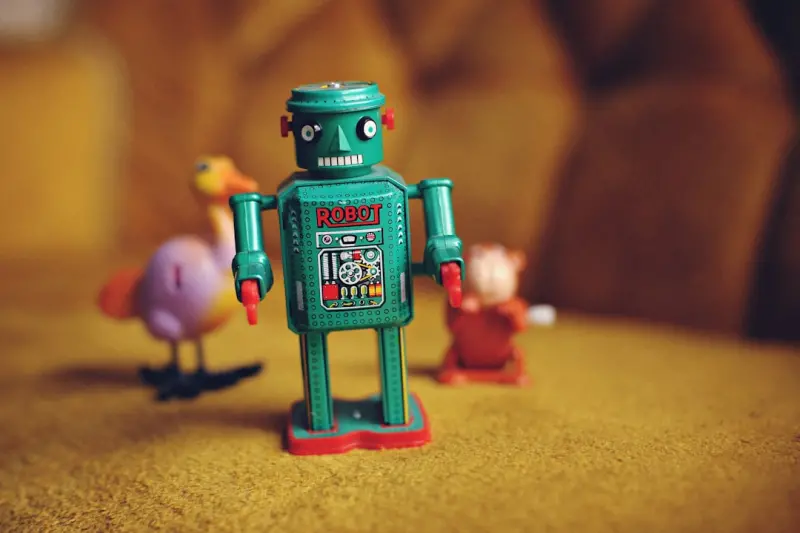
The New Play Landscape
When I was a kid, a toy was a static object—a plastic soldier, a wooden train, a rubber ball. Today, that definition is exploding. Children are no longer limited to the physical constraints of a single object; they are stepping into ecosystems where code, sensors, and imagination converge. This shift isn’t just a fad; it’s a fundamental re‑definition of what “play” means. In the next few years, AI‑driven toys will become as commonplace as crayons, and they’ll do more than entertain—they’ll learn, adapt, and co‑create stories with their young owners.
Why AI Matters in the Toy Box
Artificial intelligence brings two powerful capabilities to the playground: personalization and reactive storytelling. Traditional toys have a fixed script: press a button, hear a phrase. AI‑enabled toys, however, can analyze a child’s voice tone, facial expressions, and even play patterns to adjust difficulty, suggest new challenges, or generate fresh narratives on the fly. This dynamic feedback loop creates a sense of agency that static toys simply can’t match.
Think of a plush robot that notices a child’s frustration after several failed attempts at a puzzle and subtly reduces the difficulty, or a building set that suggests new configurations based on the structures the child has already built. These experiences keep kids in the zone of proximal development, encouraging growth without the boredom of overly easy tasks or the discouragement of impossible ones.
Personalization at Scale
One of the biggest challenges for toy manufacturers has always been scaling personalization. Hand‑crafting a unique experience for each child is costly and time‑consuming. AI solves this by leveraging massive datasets and on‑device learning to generate bespoke content instantly. For instance, an AI‑driven storytelling doll can pull from a library of thousands of plot elements, remixing them into a brand‑new tale each night.
But personalization isn’t just about storylines. It also extends to physical interaction. Sensors embedded in a toy can detect grip strength, movement speed, or even temperature, allowing the toy to adapt its response. A racing car that accelerates faster when a child’s hand trembles less shows that the toy is “reading” the player’s confidence and rewarding improvement.
Augmented Reality Integration
Augmented reality (AR) is the visual bridge that connects the tangible world of a toy with the limitless digital realm. When a child points a tablet or a smart glasses device at a physical LEGO set, AR overlays animated characters, mission objectives, or instructional guides directly onto the bricks. This hybrid experience amplifies creativity while keeping the hands‑on manipulation that is crucial for motor‑skill development.
AR also opens doors for collaborative play across distances. Two children, each holding a different AR‑enabled toy, can see each other’s avatars in a shared virtual space, solving puzzles together in real time. The technology transforms solitary play into a socially rich, networked experience without sacrificing the tactile joy of handling real objects.
Design Challenges: From Data to Delight
Building AI‑powered toys isn’t just about slapping a chip inside a plush animal. Designers must consider:
- Data privacy: Children’s interactions generate sensitive data. Companies must adopt privacy‑by‑design principles, ensuring data stays on device or is anonymized before transmission.
- Latency: Real‑time responses are non‑negotiable. A laggy AI reaction breaks immersion. Edge computing and on‑device inference are becoming standard to keep the magic instantaneous.
- Durability: Toys need to survive drops, spills, and rough handling. Integrating sensors and processors while maintaining ruggedness is a delicate engineering dance.
- Battery life: Power consumption must be minimized. Efficient models and low‑power hardware are essential to keep the play session going without constant recharging.
Balancing these constraints while delivering a captivating experience requires cross‑functional collaboration—hardware engineers, data scientists, child psychologists, and storytellers all working together.
Ethical Play: Navigating the AI Frontier
As we hand over more agency to algorithms, ethical considerations become paramount. AI toys can influence behavior, reinforce stereotypes, or inadvertently expose children to biased content. Companies must establish robust content moderation pipelines, involve diverse focus groups during development, and continuously audit AI outputs for fairness.
Moreover, transparency is key. Parents should be able to see what data is collected, why it’s needed, and have the option to opt out. Clear, jargon‑free privacy notices and easy‑to‑use controls empower families to make informed decisions about the technology entering their homes.
Connecting the Dots: Learning from Other Content Strategies
Interestingly, the tactics that have driven success in content marketing are equally relevant for AI toys. For example, the concept of Micro‑Content Loops—where a single piece of content spawns multiple touchpoints—mirrors how a single AI interaction can generate a cascade of learning moments, encouraging kids to explore further.
Similarly, the rise of sustainable, gender‑neutral toys demonstrates the market’s appetite for inclusive, forward‑thinking products. While our focus is on AI, the underlying principle—creating toys that respect diversity and promote equity—remains crucial. AI can help by tailoring experiences that avoid gendered content, presenting narratives that appeal to any child regardless of identity.
Future Outlook: The Playground of Tomorrow
Looking ahead, the convergence of AI, AR, and advanced materials will give rise to “smart ecosystems” where toys communicate with each other, with the home environment, and even with educational platforms. Imagine a scenario where a child’s smart puzzle pieces sync with a language‑learning app, adjusting vocabulary difficulty based on the child’s progress, while a nearby smart speaker provides contextual hints.
These ecosystems will also support lifelong learning. As children grow, the AI can evolve, unlocking new modes—creative building, coding challenges, scientific simulations—ensuring the toy remains relevant beyond the typical short lifespan of a fad.
In short, the AI toy revolution is not just about novelty; it’s about redefining play as an adaptive, collaborative, and ethically sound experience. By embracing these technologies responsibly, we can give the next generation tools that nurture curiosity, resilience, and imagination in ways that static plastic never could.

Related Posts
The Hidden Psychology Behind Blind‑Box Collectibles and Their Rise in Modern Play
Blind‑box toys blend mystery, storytelling, and modern tech to spark curiosity and community, offe... Read More

When AI Meets Play: The Rise of Personalized Toy Companions
AI‑enhanced toys are transforming play by offering dynamic interaction, tailored content, and grow... Read More

Why the Tactile Toy Renaissance Is the Future of Play
A deep dive into the growing demand for tactile, analog toys that boost development, promote sustain... Read More
Top Posts

The Content Creator’s Playbook: How I Turn Ideas into Authority in 2024
Brad Hays shares his step‑by‑step playbook for creating, optimizing, and iterating content that captures attention, earns backlinks, and stands the test of ...Read More

Unlocking LinkedIn’s Hidden SEO Levers for Professional Growth
Learn cutting‑edge LinkedIn SEO strategies that go beyond keywords—optimize headlines, leverage hashtags, embed rich media, and harness team advocacy to dom...Read More

Jimmy Anand’s Insider Look at the Hottest Toy Trends Shaping 2024
Jimmy Anand breaks down 2024’s must‑watch toy trends, blending tech, sustainability, and nostalgia, plus actionable tips for marketers and creators....Read More

The Evolution of Google Algorithms: A Comprehensive Guide to Staying Ahead
Google algorithms have undergone significant changes over the years, transforming the way search engines rank websites. Learn how to optimize your website for b...Read More
0 Comments
Post Comment
You will need to Login or Register to comment on this post!