
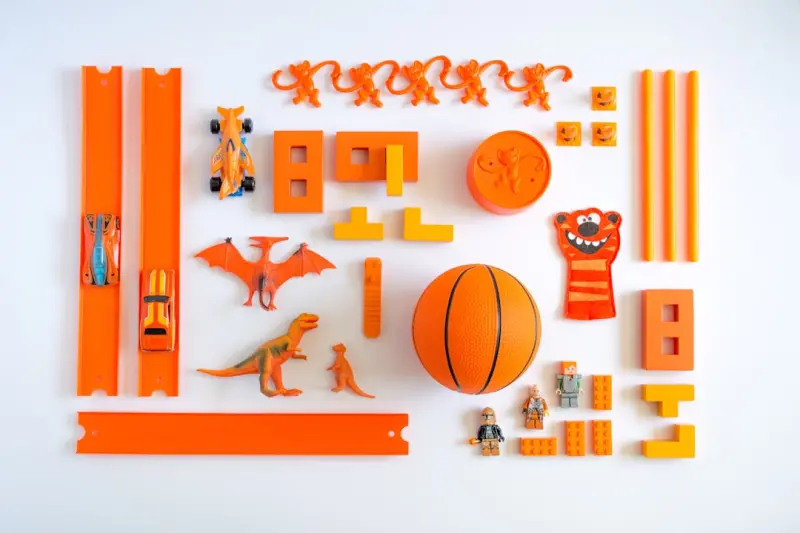
Modular Play Systems: The Future‑Ready Toy Trend You’ve Been Missing
When I was a kid, my imagination was powered by a single plastic brick or a wooden train set. Fast‑forward to today, and the toys on shelves look like mini‑engineering labs. As someone who spends his weekdays dissecting SaaS growth hacks and his evenings tinkering with the newest playsets, I’ve begun to see a pattern: modular toys are no longer a niche hobby—they’re becoming the cornerstone of how we future‑proof our children’s learning. This isn’t just about flashy colors or louder marketing; it’s a shift in design philosophy that aligns with how we build software, collaborate remotely, and solve problems in real time.
What Exactly Is a Modular Play System?
A modular play system is a collection of interchangeable components—blocks, gears, sensors, magnetic pieces, or even small electronic modules—that snap together in countless configurations. Think of the classic building brick, but upgraded with:
- Smart connectors that recognize each other and light up when properly aligned.
- Open‑source hardware kits that let kids add microcontrollers, LEDs, or tiny speakers.
- Physical‑digital bridges such as QR codes that unlock augmented challenges (without turning the whole experience into a full‑blown AR toy, which we’ve already covered in another post).
The magic lies in the possibility space. One set can become a robot, a bridge, a cityscape, or a musical instrument—all without buying a new box.
Why Parents and Educators Are Turning to Modular Toys
There’s a growing body of research linking open‑ended play with deeper cognitive gains: spatial reasoning, systems thinking, and even early coding concepts. Here’s why modular toys hit the sweet spot:
- Scalability of Play—Just as a SaaS product scales with user demand, modular kits grow with a child’s skill level. A three‑year‑old can start with simple blocks, while a nine‑year‑old adds sensors and writes basic code.
- Collaborative Problem Solving—Kids learn to negotiate, iterate, and co‑create, mirroring the real‑time collaboration that drives modern teams.
- Feedback Loops—When a structure holds together, kids get immediate, tangible validation. When it collapses, they experience a low‑stakes failure and try again, building resilience.
- Cross‑Disciplinary Learning—From physics (lever arms) to storytelling (creating a narrative world), modular toys blur the lines between subjects, fostering a holistic mindset.
Design Principles That Make Modular Toys Stand Out
Just as we evaluate SaaS tools by API flexibility, security, and onboarding, a great modular system should excel in three design pillars:
1. Interoperability
Pieces should work not only within one brand’s ecosystem but also with third‑party components. This is the toy equivalent of an open API. Brands that embrace universal connectors (think magnetic pegs that follow a standard size) enable a interactive assets mindset—kids can mash up their favorite kits just like developers mash up APIs.
2. Incremental Complexity
A well‑designed set offers a learning curve. Early builds require no instructions, encouraging intuition. Later challenges introduce guided missions, subtle hints, and optional code snippets for those ready to dive deeper.
3. Tangible Feedback
Whether it’s a click that confirms a proper connection or a sensor that lights up when a circuit completes, physical feedback closes the loop between action and outcome. This mirrors the instant analytics dashboards we love in SaaS: you see the impact of a change right away.
Case Study: The “Build‑It‑Yourself” Lab Kit That Grew With My Daughter
Last summer I gifted my seven‑year‑old Maya a modular lab kit that promised “from simple gears to programmable drones.” Here’s how the journey unfolded:
- Week 1 – Exploration: She assembled a basic gear train, discovering that larger gears slowed rotation. No instructions, just curiosity.
- Week 3 – Challenge: The kit introduced a “bridge‑builder” mission. Maya had to create a structure that could support a small weight. She used magnetic connectors and reinforced the base with extra plates.
- Week 6 – Integration: The kit’s optional microcontroller module arrived. Maya programmed a LED sequence that lit up when the bridge held a weight for more than five seconds. The moment the LEDs flashed, she squealed—she’d written code that interacted with a physical object.
- Week 9 – Collaboration: I joined the play session, and we used our laptops to sketch a 3‑D model of a future “city” using a free design tool. The design guided the next round of building, echoing the data‑driven research mindset—collect, analyze, iterate.
What started as a simple toy transformed into a multi‑disciplinary project that blended engineering, storytelling, and digital literacy. Maya’s confidence skyrocketed, and I walked away with a fresh perspective on how modular design can be a catalyst for lifelong learning.
How Modular Toys Align With the Future of Work
The modern workplace prizes adaptability, cross‑functional collaboration, and continuous learning—traits that modular toys nurture from a young age. Here’s the direct correlation:
| Future‑Work Skill | Modular Toy Parallel |
|---|---|
| Systems Thinking | Seeing how a gear, a sensor, and a code snippet fit together to solve a problem. |
| Iterative Development | Building, testing, breaking, and rebuilding structures repeatedly. |
| Cross‑Team Communication | Co‑creating narratives and prototypes with siblings or friends. |
| Learning Agility | Moving from mechanical to electronic modules seamlessly. |
The Business Angle: Why Toy Companies Should Embrace Modularity
From a market perspective, modular systems unlock three powerful revenue streams:
- Base Set Sales—A low‑cost entry point that drives volume.
- Expansion Packs—Targeted add‑ons (e.g., robotics, sound modules) that boost average order value.
- Subscription Services—Monthly “challenge boxes” that deliver new missions, similar to SaaS subscription models.
Companies that treat each expansion as an API endpoint can foster a thriving ecosystem of third‑party creators. Think of it as the Lego of the 21st century, where indie designers release custom modules on an online marketplace, and the brand takes a modest cut.
Potential Pitfalls and How to Avoid Them
Even the most promising trends have blind spots. Here are common missteps and quick fixes:
- Over‑Complexity Too Soon—Don’t dump advanced sensors into the starter kit. Keep early experiences simple; layer complexity gradually.
- Lack of Standards—If every brand invents its own connector, the ecosystem fragments. Advocate for industry‑wide standards, perhaps through a consortium.
- Insufficient Documentation—Kids need clear, visual guides. Pair physical manuals with QR‑linked videos that demonstrate builds step‑by‑step.
- Neglecting Accessibility—Design pieces that are easy to grip for children with motor challenges. Offer tactile variations and color‑blind friendly palettes.
Future Horizons: What’s Next for Modular Play?
Looking ahead, we can anticipate a blend of three emerging technologies:
- Low‑Cost Edge AI—Tiny processors that enable on‑board decision making, allowing toys to respond to voice or gesture without a cloud connection.
- Open‑Source Firmware—Communities will share code snippets for sensors, lights, and motors, turning each module into a programmable canvas.
- Mixed‑Reality Projection—Not full AR, but subtle projection mapping that adds visual cues onto physical builds, enriching the storytelling layer.
When these elements converge, the line between “toy” and “learning platform” will blur even further, creating a lifelong ecosystem where today’s play becomes tomorrow’s skill set.
Getting Started: A Simple Three‑Step Blueprint for Parents
If you’re intrigued but unsure where to begin, follow this practical roadmap:
- Choose a Core System—Pick a kit with a solid base and a clear expansion path. Look for universal connectors and community support.
- Set a Play Goal—Whether it’s building a moving car or designing a simple alarm, a clear objective guides focus.
- Iterate and Document—Encourage your child to sketch ideas, build, test, and then note what worked. Treat each session like a mini‑sprint.
By treating play as a structured yet creative process, you’ll nurture curiosity while providing the scaffolding that helps kids translate imagination into tangible outcomes.
Conclusion: Play Is the Original Prototype
In the SaaS world, we iterate on prototypes until we find product‑market fit. In the world of kids, modular toys are the original prototype environment—safe, forgiving, and endlessly adaptable. By embracing modular play systems, parents and educators are not just buying a toy; they’re investing in a framework that mirrors the future of work, learning, and innovation.
So the next time you walk past the aisles of conventional dolls and action figures, ask yourself: Which toys are teaching my child to think like a builder, a coder, and a storyteller—all at once? The answer might just be a set of interchangeable blocks waiting to become the next big breakthrough in child development.

Related Posts

Eco‑Friendly Toys: Redefining Play for a Greener Future
Explore the rise of sustainable toys—how reclaimed materials, modular design, and conscious brandi... Read More
Green Playgrounds: How Sustainable Toys are Reshaping Childhood
Sustainable toys are transforming the industry, blending eco‑friendly materials, transparent story... Read More
Eco‑Friendly Toys: The Next Wave of Sustainable Play
A deep dive into the rise of sustainable toys, covering innovative materials, leading brands, develo... Read More
Top Posts

Zero‑Click SEO for SaaS: Owning the SERP Without a Click
Zero‑click SEO lets SaaS brands claim prime real‑estate on Google’s search results page without forcing a click. This guide walks you through identifying ...Read More

From Search to Sign‑Up: An SEO Blueprint for SaaS Onboarding
Discover a fresh SEO strategy that bridges search intent directly to SaaS onboarding, using data‑driven keyword mapping, interactive landing pages, and zeroâ€...Read More

The Rise of Hyper-Local SEO: How to Dominate Your Neighborhood
Hyper-local SEO is a powerful way to dominate your neighborhood and attract highly relevant traffic to your website. Learn how to optimize your website for loca...Read More

From Data to Influence: Building an AI‑Powered Social Media Flywheel for SaaS
Learn how to turn AI‑derived insights into a self‑reinforcing social media flywheel that continuously fuels SaaS growth, from data harvesting to modular con...Read More
0 Comments
Post Comment
You will need to Login or Register to comment on this post!