
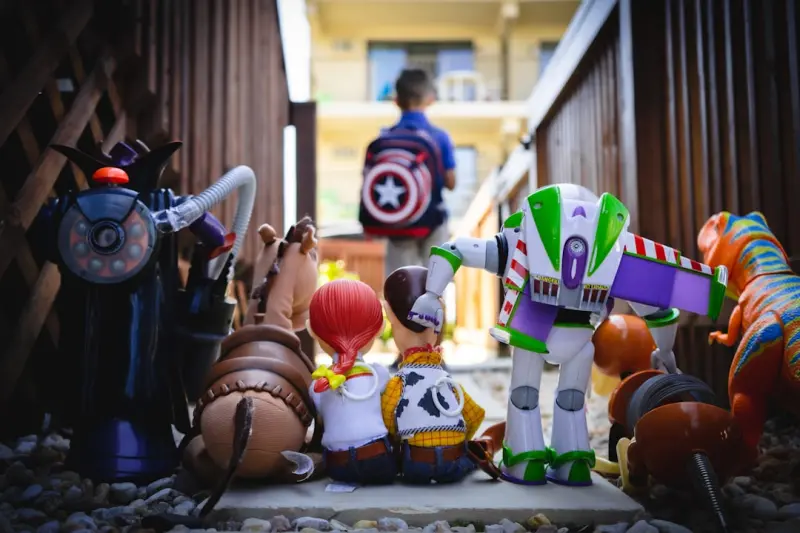
Why Physical Play Still Wins in a Digital Era
I still remember the clang of wooden blocks hitting the floor as my sister and I built precarious towers, a sound that has never been replicated by a digital notification, because each thud carried the weight of imagination, the promise of a new skyline, and the subtle lesson that balance is earned through trial and error rather than a scripted algorithm. Today, with tablets perched on every coffee table and streaming services competing for our children’s attention, the tactile feedback of a plastic puzzle piece slipping between tiny fingers feels like a rebellious act, a reminder that the world still values texture, resistance, and the satisfying click that signals a problem solved without a progress bar. Research from early‑childhood scholars consistently shows that physical toys boost fine‑motor development, strengthen spatial reasoning, and nurture patience in ways that pixel‑perfect apps simply cannot replicate, making them an essential counterbalance to the allure of endless scrolling.
Open‑Ended Toys: The Secret Sauce for Creativity
Unlike toys that dictate a single outcome—think of a train set that only runs on a predefined track—open‑ended toys such as magnetic tiles, modeling clay, and simple cardboard boxes hand the reins over to the child, inviting endless reinterpretation and improvisation. Studies published in developmental psychology journals reveal that children who regularly engage with materials that lack a fixed purpose develop higher divergent thinking scores, a predictor of later problem‑solving ability and artistic innovation. By deliberately choosing items that can be deconstructed, recombined, and repurposed, parents and educators provide a sandbox where imagination is the only rule, and the resulting confidence in self‑directed play often spills over into academic and social arenas.
Storytelling Through Play: Building Language Skills Naturally
When a child slides a figurine across a pretend kitchen countertop or arranges animal figurines in a make‑believe safari, they are not merely moving objects; they are weaving narratives, assigning motives, and experimenting with cause and effect—all foundational components of language acquisition. The act of narrating a play scene encourages the use of new vocabulary, sentence structures, and expressive intonation, effectively turning a simple game into an informal language lab. Moreover, the collaborative nature of shared storytelling strengthens listening skills, turn‑taking, and empathy, because each participant must honor the evolving plot while contributing their own ideas, creating a dynamic feedback loop that mirrors real‑world conversation.
Family Bonding: Multigenerational Play That Bridges Gaps
One of the most rewarding aspects of tangible toys is their ability to become a bridge between generations, offering grandparents, parents, and children a common language that transcends screens and social media feeds. When my own mother joined us for a night of building a cardboard‑city, the conversation flowed from nostalgic tales of her childhood forts to the giggles sparked by today’s imaginative skylines, reinforcing family ties while preserving oral histories. Introducing sustainable play ideas into these sessions not only teaches environmental stewardship but also adds a layer of purpose, turning each shared creation into a legacy piece that future generations can cherish.
DIY Toy Hacks: Turning Everyday Items Into Imaginative Props
Innovation doesn’t always require a pricey boutique brand; often the most memorable toys emerge from the humble items tucked away in a kitchen drawer or garage shelf. Empty paper towel rolls become telescoping swords, clothespins transform into miniature puppets, and a simple set of rubber bands can evolve into a kinetic catapult that dazzles both kids and adults alike. By encouraging children to repurpose household objects, parents cultivate a mindset of resourcefulness and problem‑solving that extends far beyond the playroom, laying the groundwork for future inventors who see potential in the mundane. Moreover, these DIY projects foster a sense of ownership—when a child proudly presents a handcrafted game, the emotional attachment is stronger than with mass‑produced alternatives.
Balancing Screen Time: Practical Tips for Parents
Setting healthy boundaries around digital consumption is less about imposing strict bans and more about creating intentional rituals that honor both screen and play time. One effective strategy is the “tech‑free zone” rule, designating certain rooms—like the dining area or the bedroom—as spaces where only analog toys are permitted, thereby prompting families to gravitate toward board games, puzzles, or building sets during meals and bedtime routines. Another tip involves co‑playing: sit beside your child as they manipulate a toy, ask open‑ended questions, and model curiosity, turning a solitary activity into a shared adventure. Finally, use visual timers to demarcate play intervals, giving children a clear sense of when it’s time to switch from a digital app to a physical game, which reduces resistance and builds self‑regulation skills.
Future of Play: Hybrid Experiences Without Losing Tactility
While the rise of augmented reality and interactive projections promises dazzling new play possibilities, the most successful hybrids will always anchor themselves in tangible, hands‑on elements that satisfy our innate need for touch and resistance. Imagine a board game where physical tokens are scanned to unlock digital quests, or a puzzle that lights up when assembled correctly, blending the excitement of technology with the satisfaction of moving real pieces. By thoughtfully integrating the rise of mixed‑reality play into traditional formats, designers can enhance storytelling depth without eroding the fundamental kinesthetic feedback that makes play feel rewarding. This balanced approach ensures that future generations inherit the best of both worlds: the immersive allure of digital layers and the grounding comfort of material objects.
Conclusion: Embrace the Mess, Celebrate the Joy
The world may be racing toward ever‑smarter screens, but the simple joy of a child’s laughter echoing around a pile of LEGO bricks, a cardboard fort, or a hand‑crafted marionette remains timeless, reminding us that creativity thrives best when we allow mess, noise, and tactile exploration. By deliberately weaving open‑ended toys, storytelling moments, family collaboration, and mindful screen‑time practices into daily life, we equip children with the confidence to imagine, the resilience to troubleshoot, and the social skills to connect—qualities that no algorithm can replicate. So the next time you spot a stray puzzle piece on the floor, consider it not as clutter but as a seed of curiosity waiting to grow, and let the inevitable chaos of play become the soundtrack of a richer, more balanced childhood.

Related Posts

The Unexpected Benefits of Playful Tech: How Modern Toys Nurture Creativity
Explore the rise of eco‑friendly, smart toys and learn how blending open‑ended play with technol... Read More

DIY Toy Upcycling: Breathing New Life into Everyday Objects
Explore the joy of turning everyday waste into imaginative playthings with simple steps, project ide... Read More

Modular Play Sets: Unlocking Endless Creativity and Learning
Modular play sets empower children to design, rebuild, and narrate their own stories, blending tacti... Read More
Top Posts

Video‑First SEO: How SaaS Companies Can Win the Search Engine Game
Learn how to integrate explainer videos, product demos, and customer success stories into a data‑driven SEO plan that boosts rankings, engagement, and convers...Read More

Link Building as a Relationship Engine for SaaS Growth
Treat each backlink as a partnership seed. This guide shows SaaS marketers how to build lasting relationships through co‑created content, integrations, openâ€...Read More
Embracing the Future of SEO: Strategies for Success in a Changing Landscape
Stay ahead of the curve with the latest SEO strategies and trends. Learn how to adapt to the changing landscape and improve your online presence with our expert...Read More

Headless WordPress SEO: Turning Decoupled Architecture into Ranking Power
A practical guide to leveraging headless WordPress for SEO, covering crawlability, URL structure, dynamic meta tags, CDN strategies, and real‑world results....Read More
0 Comments
Post Comment
You will need to Login or Register to comment on this post!