

Why On‑Page SEO Should Be Treated Like a Conversion Engine
When most marketers think about SEO, they picture backlinks, domain authority, and keyword research. Those are important, but the real work that turns a visitor into a paying customer happens on the page itself. By weaving together clear intent signals, intuitive design, and subtle persuasion tactics, you can make every piece of on‑page content act as a miniature sales funnel.
1. Map Search Intent to Page Architecture
Every query falls into one of three broad intent buckets: informational, navigational, or transactional. Instead of forcing a single piece of copy to answer all three, design the page hierarchy so each section speaks directly to a specific intent.
- Informational block – Use concise headings, bullet points, and short paragraphs to satisfy quick‑look readers.
- Navigational block – Provide clear pathways to product pages, pricing tables, or demo requests.
- Transactional block – Highlight benefits, trust signals, and a single, prominent call‑to‑action (CTA).
When search engines see a well‑structured layout that mirrors the user’s mental model, they reward you with higher rankings and better click‑through rates.
2. Speak the Language of Entities, Not Just Search Terms
Google’s algorithm now evaluates the relationships between concepts—what we call “entities.” By embedding the right entity signals throughout your copy, you help the engine understand the context of your page.
Instead of repeating a single phrase, sprinkle related terms, brand names, and industry‑specific jargon naturally. This approach mirrors how a human would explain a solution, and it aligns with the Multimodal Algorithm Landscape that rewards semantic relevance over raw repetition.
3. Leverage Semantic HTML for Clarity
HTML tags are more than styling tools; they’re signals to crawlers. Use them purposefully:
<h1>for the primary headline that reflects the main intent.<h2>and<h3>for hierarchical subtopics, ensuring a logical flow.<section>and<article>to group related content blocks.<nav>for internal navigation, improving both UX and crawlability.
When search bots encounter clean, well‑nested markup, they can index your page more accurately, which translates into richer SERP snippets.
4. Optimize Visual Assets for Search and Speed
Images, videos, and diagrams are essential for SaaS explanations, but they can also become SEO liabilities if mishandled.
- Descriptive filenames – Rename files to reflect the core concept (e.g., dashboard-analytics-overview.png).
- Alt text as a mini‑copy – Write concise, meaningful alt attributes that reinforce the page’s entity signals.
- Modern formats – WebP or AVIF reduce file size without sacrificing quality, supporting fast load times.
- Lazy loading – Defer off‑screen assets to improve perceived performance, a factor that indirectly influences rankings.
5. Turn FAQs into Self‑Contained Ranking Opportunities
Frequently asked questions are natural candidates for “passage ranking.” Break down each question into its own <section> with a heading that mirrors the query. This not only improves user experience but also gives search engines a clear snippet to pull from.
When you answer a question in a concise paragraph followed by a short list or diagram, you increase the chance of appearing in the “People also ask” carousel—a premium placement that drives high‑intent traffic.
6. Harness the Power of Internal Linking with Data‑Driven Precision
Every internal link is an endorsement of relevance. Instead of linking arbitrarily, analyze which pages share the strongest entity overlap and create contextual pathways.
For example, a post about “API rate limiting” can naturally link to a guide on “scalable authentication.” By using a strategic approach, you amplify topical authority and guide readers deeper into the funnel.
Our own research on Data‑Driven Internal Linking shows that pages with a high internal link density around a core concept enjoy a measurable boost in both rankings and dwell time.
7. Craft Persuasive Meta Elements Without Sacrificing Relevance
The meta title and description are the first touchpoint in the SERP. Treat them as mini‑ad copy:
- Include the primary entity and a benefit (“Real‑time analytics for rapid decision‑making”).
- Stay under character limits to avoid truncation.
- Use a compelling verb (“Unlock,” “Accelerate,” “Discover”).
A well‑written meta description can improve click‑through rates by up to 30 %, which signals to Google that the page satisfies user expectations.
8. Align On‑Page SEO with Conversion Psychology
Beyond rankings, your page should gently nudge the visitor toward the next step.
- Visual hierarchy – Use contrast, whitespace, and size to draw eyes to the CTA.
- Social proof – Embed customer logos, short testimonials, or usage stats near the decision point.
- Risk reducers – Offer a free trial, money‑back guarantee, or clear privacy policy to lower friction.
- Micro‑commitments – Provide a “download a one‑pager” link before asking for a full demo request; each small action builds momentum.
9. Keep Content Fresh Through Structured Updates
Search engines love freshness, but you don’t need a complete rewrite every quarter. Instead, adopt a “refresh cadence”:
- Quarterly: Update statistics, add new case studies, or swap out outdated screenshots.
- Monthly: Tweak headings or add a new FAQ based on emerging user questions.
- Weekly: Monitor SERP features (e.g., “People also ask”) and incorporate relevant new queries.
This incremental approach signals that the page remains relevant, helping you maintain or improve rankings over time.
10. Measure Success Beyond Rankings
Traditional SEO metrics—organic traffic, keyword positions—are still valuable, but on‑page optimization should be judged by how well it fuels downstream goals.
- Engagement metrics – Bounce rate, average session duration, and scroll depth indicate content relevance.
- Conversion metrics – Track CTA clicks, form submissions, and trial sign‑ups directly tied to the page.
- Search‑result click‑through rate (CTR) – A higher SERP CTR often correlates with stronger relevance signals.
By aligning SEO dashboards with product‑marketing funnels, you turn “traffic” into a meaningful KPI.
Putting It All Together: A Checklist for the Modern On‑Page SEO Sprint
- Define the primary search intent and map it to page sections.
- Identify core entities and sprinkle related terms naturally.
- Apply semantic HTML tags for hierarchy and clarity.
- Optimize every visual asset with descriptive filenames, alt text, and modern formats.
- Structure FAQs as independent, answer‑first sections.
- Implement data‑driven internal links to reinforce topical authority.
- Write compelling, benefit‑focused meta titles and descriptions.
- Integrate conversion‑centric design elements (visual hierarchy, social proof, risk reducers).
- Schedule regular content refreshes to keep the page current.
- Track engagement, conversion, and SERP CTR metrics alongside rankings.
When you treat on‑page SEO as a holistic experience—where content, code, design, and psychology converge—you create a self‑reinforcing loop. Higher rankings bring more qualified visitors; a well‑optimized page converts a higher percentage of those visitors, sending positive user‑behavior signals back to the search engine, which in turn boosts rankings even further.
Final Thought: On‑Page SEO Is No Longer a Technical Afterthought
In the fast‑moving SaaS landscape, the difference between a good product and a great growth engine lies in how effectively you guide prospects from discovery to decision. By mastering the on‑page elements outlined above, you’ll turn every landing page, blog post, or documentation hub into a conversion magnet—fueling sustainable growth without relying solely on external link acquisition or paid channels.

Related Posts

Unlocking the Hidden Levers of On‑Page SEO: From Entity Markup to Core Web Vitals
A deep dive into the underused on‑page SEO tactics that go beyond keyword stuffing, covering perfo... Read More

Reimagining On‑Page SEO: Harnessing User‑Centric Internal Architecture
Explore how a user‑centric internal linking strategy, combined with semantic HTML and expanded str... Read More

The Hidden Psychology Behind On‑Page SEO: Designing for Human Minds
Explore a human‑first approach to on‑page SEO, covering cognitive flow, intent mapping, micro‑... Read More
Top Posts

Unlock the SEO Power of LinkedIn’s Native Publishing
Learn to turn LinkedIn’s native publishing into a dual‑search engine powerhouse, leveraging keywords, hashtags, and profile optimization for lasting SEO imp...Read More

Conversation‑First Advertising: How Messaging Apps Are Redefining SaaS Lead Generation
Messaging apps like Slack, WhatsApp, and Discord are becoming powerful ad channels for SaaS. Learn a step‑by‑step framework to create conversational ads tha...Read More
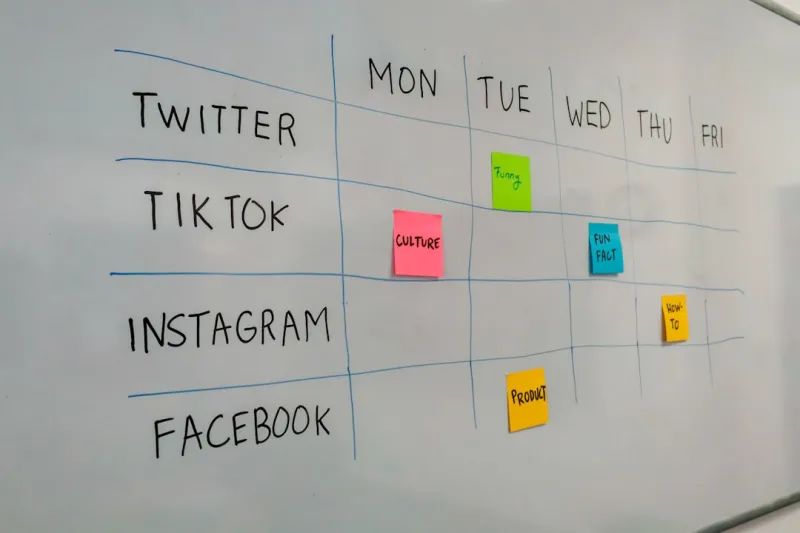
Building a Robust Social Media Strategy: Navigating the Ever-Changing Landscape
A robust social media strategy is crucial for businesses to stay ahead of the curve. Learn how to create engaging content, optimize your social media profiles, ...Read More

Beyond Speed: Mastering Crawl Budget and Indexation for Jamstack Sites
A deep dive into crawl budget for Jamstack sites, covering URL audits, canonicalization, structured data, server health, and ongoing monitoring to ensure search...Read More
0 Comments
Post Comment
You will need to Login or Register to comment on this post!