

Why Going Headless Is the Next Big Leap for WordPress SEO
When I first cut my teeth on WordPress, the platform felt like a Swiss‑army knife: versatile, endlessly extensible, and, most importantly, optimizable for search engines. Fast‑forward a few releases, and the core has become more robust, the block editor more powerful, and the ecosystem saturated with SEO plugins. Yet, there’s a quiet revolution bubbling under the surface that most site owners still overlook – headless WordPress.
In this post, I’m pulling back the curtain on the headless approach, why it matters for rankings, and how you can start decoupling your site without losing the SEO equity you’ve painstakingly built. Spoiler: it’s not just about speed; it’s about giving Google a cleaner, more intent‑driven signal that your content is the right answer.
Headless WordPress 101: The Basics
“Headless” sounds like a tech‑savvy buzzword, but at its core it’s simple: you separate the frontend presentation layer from the backend CMS. WordPress continues to act as the content repository, exposing data via the REST API or GraphQL. Meanwhile, a modern JavaScript framework—React, Vue, or Svelte—takes the reins of rendering the pages that users (and crawlers) see.
- Backend (WordPress): Stores posts, taxonomies, media, and user data. Handles authentication, revisions, and the entire editorial workflow.
- Frontend (Headless App): Pulls that data via API calls, builds static or server‑rendered pages, and serves them through a CDN.
This decoupling yields three SEO‑critical wins:
- Performance: Static or server‑rendered pages can be cached at the edge, delivering sub‑second load times that Google rewards.
- Flexibility: You can implement advanced markup, lazy‑loading strategies, and custom routing without fighting the constraints of a traditional theme.
- Future‑proofing: As Google leans more into Core Web Vitals and semantic signals, a headless stack gives you the agility to adapt quickly.
Performance Isn’t Just Speed—It’s SEO Currency
Google’s ranking algorithm treats page speed as a ranking factor, but it’s more nuanced than “faster is better.” The real metric is user‑perceived performance. When a browser fetches a page, the time to first byte (TTFB), first contentful paint (FCP), and largest contentful paint (LCP) all shape the user experience.
By generating pre‑rendered HTML at build time (a technique called static site generation), you hand Google a fully formed document to crawl. No JavaScript execution, no client‑side rendering delays. The result? Lower bounce rates, higher dwell time, and a clear signal that your content is ready for consumption.
Think of it like this: traditional WordPress themes often bundle dozens of CSS and JS files, many of which never get used on a given page. A headless front end lets you ship only the code required for each route, trimming the payload dramatically.
Semantic Signal Boost with Decoupled Rendering
One of the most overlooked SEO opportunities in a headless setup is the ability to embed rich, semantic markup directly into the HTML output. When you control the rendering pipeline, you can inject <script type="application/ld+json"> blocks, <meta> tags, and structured data snippets exactly where they belong, without relying on plugins that inject them post‑render.
For example, a product page can include Structured Data Secrets that describe price, availability, and review rating in a way Google can parse immediately. Because the markup is part of the initial HTML, search bots see it before any JavaScript runs, reducing the risk of missed signals.
Preserving SEO Equity During the Migration
Transitioning to a headless architecture can feel like moving a house without breaking any windows—if you don’t plan the migration carefully. Here’s a step‑by‑step playbook to protect your rankings:
- Audit your current site: Use a tool like Screaming Frog or Sitebulb to export every URL, its status code, and its inbound links. This becomes your migration map.
- Implement a 301 strategy: If URLs will change (e.g., from
/category/post-name/to/post-name/), set up 301 redirects on the server or via a CDN edge function. Preserve link juice. - Keep the same HTML structure initially: When you first deploy the headless front end, replicate the existing heading hierarchy, meta descriptions, and canonical tags. This avoids shocking Google’s indexer.
- Validate structured data: Run the Rich Results Test on a sample of pages to confirm that your new markup is being read correctly.
- Monitor crawl stats: In Google Search Console, watch for crawl errors, index coverage changes, and any sudden drop in impressions.
Following this checklist ensures that you’re not trading your hard‑earned rankings for a shiny new tech stack.
Headless & Taxonomy: A Match Made in SEO Heaven
If you’ve read the taxonomy‑first blueprint, you already know that a clean taxonomy structure is the backbone of a scalable SEO strategy. In a headless environment, you can take that taxonomy logic a step further.
Because the frontend pulls data via API, you can dynamically generate faceted navigation without reloading the page. Imagine a visitor filtering blog posts by “Industry” and “Solution Type” while the URL updates in real time (e.g., /blog?industry=finance&solution=crm). Each filter state is a unique, indexable URL that Google can crawl and rank.
Moreover, you can expose taxonomy metadata as JSON‑LD, turning categories and tags into first‑class entities that appear in knowledge panels. This deepens semantic relevance and helps Google understand the topical clusters you’re building.
Human‑Centric Content Still Rules, Even Headless
Decoupling your site does not mean you abandon the human‑centric on‑page SEO principles that make content resonate. In fact, a headless stack gives you more levers to fine‑tune the user experience:
- Progressive Web App (PWA) features: Offline support, push notifications, and add‑to‑home‑screen prompts keep users engaged beyond the initial visit.
- Dynamic content personalization: Serve different copy or calls‑to‑action based on user intent signals captured in the URL or via cookies.
- Micro‑interactions: Subtle animations and feedback loops can guide users through a conversion funnel without slowing page load.
All of these enhancements feed back into SEO indirectly—by boosting dwell time, reducing bounce, and increasing conversions, you signal to Google that your pages satisfy real user needs.
Choosing the Right Front‑End Framework
The headless market is crowded, but a few frameworks stand out for SEO‑focused developers:
- Next.js (React): Offers static site generation (SSG), server‑side rendering (SSR), and incremental static regeneration (ISR) out of the box. Perfect for mixing static blog posts with dynamic product pages.
- Nuxt.js (Vue): Provides similar capabilities with a Vue‑centric developer experience. Its
nuxt generatecommand creates a fully static site that can be hosted on any CDN. - SvelteKit: Known for its ultra‑light runtime and fast compile times. Ideal if you prioritize minimal JavaScript payloads.
Whichever you pick, make sure the framework supports pre‑rendering and edge caching. The goal is to serve a fully formed HTML document to both users and bots, while still enjoying the flexibility of a modern JavaScript stack.
Edge Caching: Bringing Content Closer to the User
When you combine a headless front end with a CDN that offers edge functions (e.g., Cloudflare Workers, Netlify Edge, Vercel Edge), you can cache rendered HTML at the geographic edge. The benefits are twofold:
- Speed: Users get the page from a server just milliseconds away, dramatically lowering latency.
- Freshness control: You can set cache‑revalidation rules based on WordPress post updates, ensuring that search engines always see the latest version without manual purges.
In practice, you’d configure your build pipeline to generate a _redirects or netlify.toml file that tells the CDN to serve the static HTML for known routes and fallback to the SSR function for dynamic paths.
Testing & Measuring Success
Implementing headless SEO is an ongoing experiment. Here’s how I keep tabs on performance and rankings:
- Core Web Vitals Dashboard: Tools like Google PageSpeed Insights and Lighthouse CI give you a continuous stream of FCP, LCP, and CLS metrics.
- Search Console Performance Report: Watch for shifts in impressions, CTR, and average position after each deployment.
- Log File Analysis: Scrape your server logs (or CDN logs) to see which URLs Googlebot is crawling and how often.
- A/B Testing Content Variants: Use a tool like Optimizely or Split.io to serve alternate meta descriptions or schema snippets and measure impact.
The key is to iterate. If a new page type isn’t ranking, tweak the markup, improve the load time, and re‑submit the URL via the URL Inspection tool.
Common Pitfalls and How to Avoid Them
Even with a solid plan, developers hit snags. Here are the top three and quick fixes:
- Over‑reliance on client‑side rendering: If you let JavaScript generate the entire page, Google may see a thin skeleton. Use SSG or SSR to guarantee a complete HTML payload.
- Missing
rel=canonicaltags: When you generate multiple URL variants (e.g., filtered views), ensure each page declares a canonical version to prevent duplicate content issues. - Neglecting fallback routes: Some bots don’t execute JavaScript. Provide a simple static fallback for critical pages (like the home page and top‑level categories).
Address these early, and you’ll avoid costly re‑indexing penalties down the line.
Wrapping Up: The SEO Payoff of Going Headless
WordPress will remain a powerhouse for content management, but the way we deliver that content is evolving. By decoupling the frontend, you gain:
- Lightning‑fast page loads that satisfy Core Web Vitals.
- Fine‑grained control over structured data and semantic markup.
- Scalable taxonomy handling that fuels topical authority.
- Modern UX patterns (PWAs, personalization) that keep users engaged.
All of these translate to stronger rankings, higher click‑through rates, and a future‑ready site that can adapt to whatever Google rolls out next. If you’ve been stuck in the “theme‑and‑plugin” comfort zone, it’s time to experiment with a headless approach. Start small—maybe a landing page or a blog post—and watch the SEO metrics climb. The data will speak for itself.

Related Posts
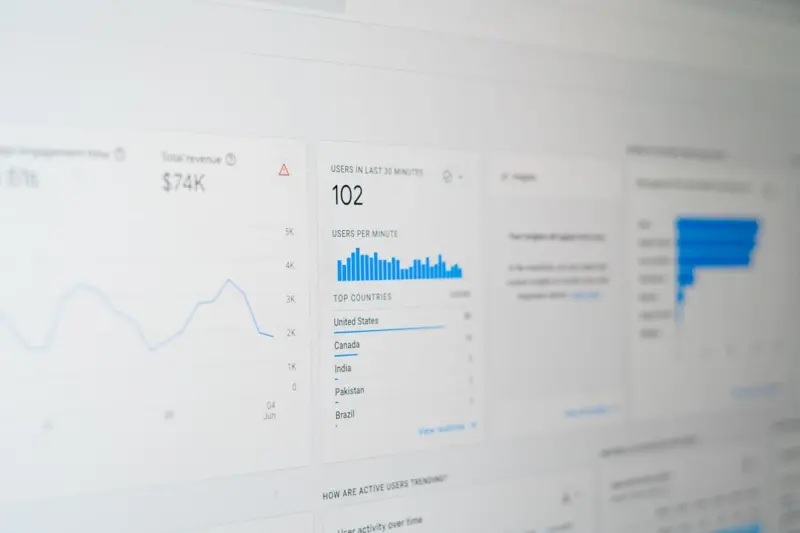
Gutenberg Meets Google: Unleashing WordPress SEO on Steroids
Learn how to transform Gutenberg blocks into powerful SEO assets—covering schema markup, smart int... Read More

Unlocking WordPress SEO: The Power of Taxonomies and Custom Post Types
Learn why smart taxonomy design and custom post types are the hidden SEO engines in WordPress, and g... Read More

The Human‑Centric Playbook for WordPress SEO Success
Learn how to blend technical foundations, on‑page optimization, and user‑first content to domina... Read More
Top Posts

Zero‑Click Search Dominance: Owning the SERP Landscape
Discover a fresh SEO approach that captures the most valuable SERP real estate—featured snippets, knowledge panels, and more—so your brand thrives in a clic...Read More

The Hidden Power of Ephemeral Storytelling in B2B Content Marketing
Ephemeral storytelling leverages scarcity and immediacy to capture busy B2B audiences, driving higher engagement, faster demos, and a shorter sales cycle while ...Read More

Micro‑Frontends Meet Technical SEO: Scaling SaaS Sites for Search Engines
A deep‑dive into aligning micro‑frontend architectures with technical SEO best practices—covering SSR, canonicalization, crawl‑budget, structured data, ...Read More
Content Strategy in the Age of AI: A Comprehensive Guide
Learn how to create a successful content strategy in the age of AI. Discover how to leverage AI-powered tools, prioritize user experience, and stay ahead of the...Read More
0 Comments
Post Comment
You will need to Login or Register to comment on this post!