
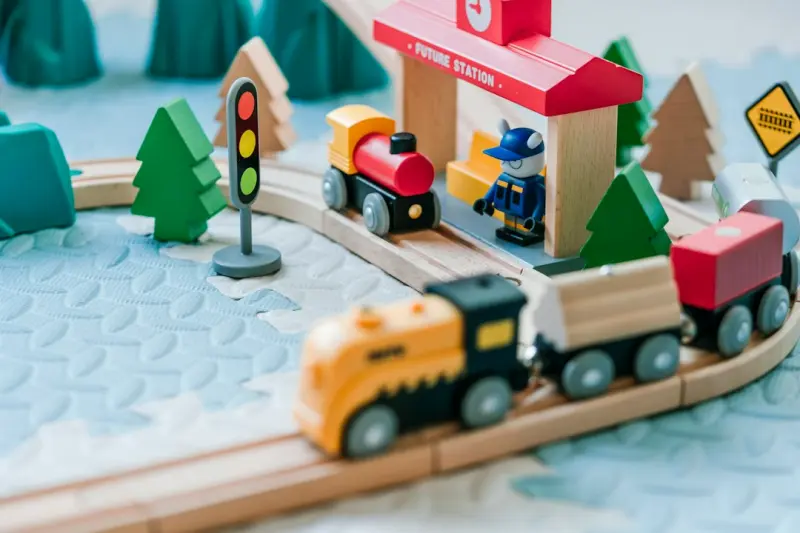
The Quiet Revolution of Narrative Play: Why Toys That Tell Stories Matter More Than Ever
When I was a kid, my favorite afternoons were spent huddled on the floor, arranging wooden blocks into sprawling kingdoms or improvising dialogues for a battered action figure. Those moments weren’t just about distraction—they were the earliest rehearsal spaces for imagination, problem‑solving, and empathy. Today, as I watch my own children (and their friends) dive into a market flooded with glittering gadgets and AI‑powered companions, I’m struck by a subtle shift: the resurgence of toys that prioritize storytelling over sheer spectacle.
In a world where attention spans are measured in seconds and digital feeds constantly compete for our focus, the humble act of coaxing a narrative from a simple object feels revolutionary. This isn’t a nostalgic yearning for the past; it’s an intentional, research‑backed pivot toward play that cultivates deeper cognitive pathways.
From Passive Consumption to Active Creation
Most contemporary toys are engineered to deliver instant gratification—a light flashes, a sound blares, a screen lights up with a pre‑programmed animation. While there’s undeniable joy in that immediacy, it often relegates children to the role of passive consumers. Narrative toys flip the script. They hand the storytelling reins to the child, offering scaffolds—like character cards, modular sets, or open‑ended prompts—that spark the imagination without dictating the plot.
Research from developmental psychologists shows that when children are invited to construct stories, they activate the prefrontal cortex, the brain region associated with planning, decision‑making, and social cognition. In other words, every made‑up dragon battle or improvised tea party is a mini‑workout for the brain’s executive functions.
Why Storytelling Toys Align with the Skills of Tomorrow
Employers across industries now prioritize soft skills—critical thinking, collaboration, adaptability—over rote technical ability. Narrative play naturally cultivates these competencies:
- Problem‑Solving: Children must navigate plot twists, resolve conflicts, and devise creative solutions.
- Empathy: By adopting different character perspectives, they practice perspective‑taking.
- Communication: Storytelling invites verbal articulation, active listening, and the exchange of ideas.
- Iterative Thinking: Stories evolve; kids learn to revise, test, and improve—mirroring the agile cycles seen in modern workplaces.
When a child builds a castle from magnetic tiles and then narrates a siege, they’re rehearsing the same kind of strategic planning that a product manager might employ when launching a new feature.
The Science of “Narrative Play”
Neuroscientists have mapped a fascinating connection between narrative construction and memory retention. When a child weaves a story around a set of toys, the brain binds sensory input (the tactile feel of the toy) with semantic meaning (the storyline). This dual encoding makes the experience stickier than a fleeting interaction with a flashing gadget.
Moreover, storytelling activates the brain’s default mode network, the same circuitry that lights up when adults daydream, plan for the future, or reflect on personal experiences. By encouraging kids to explore hypothetical scenarios, narrative toys essentially give them a sandbox for future‑self simulation.
Design Principles for the Modern Narrative Toy
If you’re a toy maker, educator, or parent looking to champion this wave, consider these design cues:
- Modularity: Pieces that can be recombined in countless ways keep the play experience fresh.
- Open‑Ended Prompts: Cards or booklets that pose “What happens next?” questions without prescribing answers.
- Multisensory Elements: Textures, sounds, and colors that invite tactile and auditory exploration, deepening immersion.
- Inclusive Characters: A diverse cast encourages children to see themselves reflected in the narrative.
- Low Tech, High Imagination: Minimal electronic components ensure the focus stays on creative thought rather than button‑pressing.
One exemplary line that embodies these principles is the “Storycraft” series, which pairs interchangeable figurines with a deck of plot cards. Each card hints at a conflict (“A storm threatens the village”) but leaves the resolution entirely to the child. The result? A dynamic storytelling engine that can be replayed endlessly.
Bridging Physical Play and Digital Storytelling
It would be a mistake to view digital and analog play as mutually exclusive. In fact, the most compelling toys of today blend the tactile joy of physical objects with the expansive possibilities of digital storytelling platforms. For instance, a set of wooden blocks equipped with QR codes can unlock a virtual world where the child’s physical constructions influence a digital narrative. This hybrid approach respects the embodied cognition benefits of hands‑on play while leveraging the connective tissue of technology.
When designing these hybrid experiences, remember to keep the digital layer as a support, not a replacement, for imagination. The goal is to amplify the story, not dictate it.
From Playroom to Classroom: Narrative Toys in Education
Educators have begun to integrate narrative toys into curricula, recognizing their power to reinforce literacy and STEM concepts. A teacher might use a set of magnetic gears to build a “machine city,” then ask students to write a short story about its inhabitants. This cross‑disciplinary activity strengthens language arts while reinforcing engineering fundamentals.
Studies in early childhood education show that children who regularly engage in narrative play demonstrate higher reading comprehension scores and greater enthusiasm for science projects. The magic lies in the seamless merging of story and structure.
Parenting with Narrative Play: Tips for the Everyday Hero
Even without a curated toy line, parents can foster narrative play with everyday objects:
- Ask Open Questions: Instead of “Do you like this?” ask “What adventure could this toy go on?”
- Rotate Props: Keep a “story box” stocked with assorted items—fabric scraps, plastic animals, cardboard tubes—and let children choose their “cast.”
- Model Storytelling: Begin a tale, pause, and invite your child to continue. This co‑creation reinforces the collaborative nature of narrative play.
- Celebrate the Process: Praise effort, imagination, and the willingness to take narrative risks, not just the “finished product.”
Future Trends: AI as a Storytelling Partner, Not a Storyteller
The next frontier isn’t AI that dictates plotlines, but AI that responds to a child's creative input. Imagine a smart speaker that listens as a child narrates an adventure and offers subtle cues—“Maybe the dragon could befriend the rabbit?”—while still leaving the final decision in the child's hands. This symbiotic relationship can nurture confidence and teach children how to collaborate with technology rather than be dominated by it.
Such an approach mirrors the broader shift in tech design: moving from prescriptive experiences to relationship‑focused ecosystems that adapt to user intent. In the realm of toys, the relationship is between child and story, not child and screen.
Closing Thoughts: The Power of a Good Story
We live in an era where everything is fast, flashy, and fleeting. Yet the most enduring memories from my childhood—like the epic saga of the cardboard spaceship that saved the neighborhood garden—were built on slow, deliberate storytelling. By championing toys that empower children to craft their own narratives, we’re not just selling a product; we’re investing in a generation of thinkers, creators, and compassionate leaders.
If you’re curious about how design can amplify these experiences, consider exploring the principles of visual hierarchy. While the article is rooted in digital design, the same ideas—guiding the eye, prioritizing elements, creating flow—apply beautifully to physical playsets.
So next time you walk past the aisle of glittering electronic toys, pause. Look for the boxes that whisper “What happens next?” and imagine the worlds waiting to be born from a child’s imagination. Those are the toys that will shape tomorrow’s innovators, storytellers, and problem‑solvers.

Related Posts

The Human‑Centric Revolution Shaping Modern Toys
A deep dive into the shift toward human‑centric toys, revealing how inclusive design, storytelling... Read More
The Sustainable Play Revolution: How Eco‑Friendly Toys Transform Childhood
Explore the rise of sustainable toys, DIY upcycling projects, and practical tips for parents to crea... Read More
Playful Futures: Sustainable, Smart, and DIY Toys Shaping the Next Generation
From biodegradable plush bears to AI‑powered coding robots and DIY maker kits, this post uncovers ... Read More
Top Posts

Beyond Checklists: A Fresh On‑Page SEO Playbook for Intent‑Driven Rankings
A hands‑on guide that redefines on‑page SEO with semantic tags, performance‑first layout, advanced schema, and intent‑driven internal linking, turning s...Read More
Revolutionizing Link Building: How to Stay Ahead of the Curve
Revolutionize your link building strategy with the latest trends, best practices, and techniques. Learn how to create high-quality content, leverage collectible...Read More

Turning Data Into Narrative: A New Blueprint for B2B Content Marketing
Data‑driven storytelling transforms static B2B copy into dynamic, personalized experiences. This guide outlines how to collect the right insights, embed them ...Read More

The Ephemeral Edge: How Short‑Lived Content Supercharges B2B SaaS Growth
Ephemeral content isn’t just for TikTok—it’s a powerful, data‑driven tactic for B2B SaaS brands. Learn how short‑lived stories, polls, and behind‑th...Read More
0 Comments
Post Comment
You will need to Login or Register to comment on this post!