
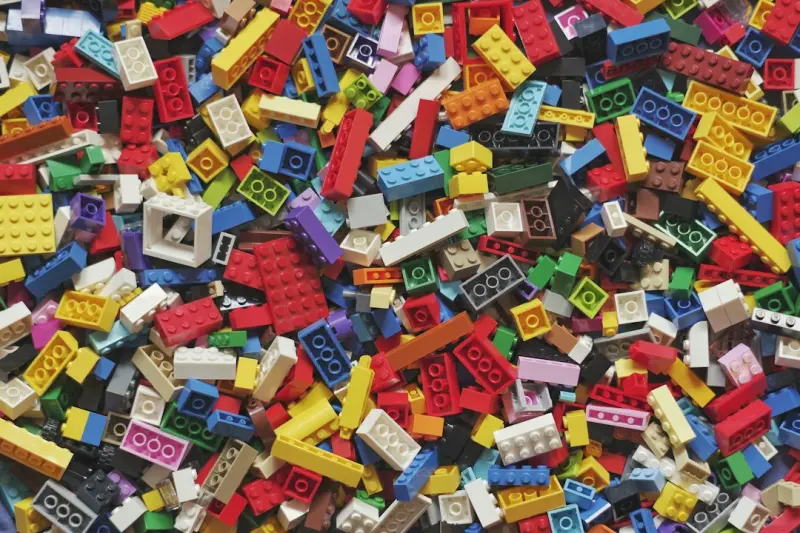
When I was a kid, my favorite “toy” was the cardboard box that waited in the corner of the living room. I’d turn it into a spaceship, a pirate ship, a secret laboratory—no batteries, no screens, just imagination and a few crayons. Today, the toy aisle looks like a futuristic marketplace, and while I love the innovation, I can’t help but feel a little nostalgic for the tactile, open‑ended play that shaped my curiosity.
The Quiet Revolution: Slow, Sensory‑First Toys
There’s a growing movement among parents, educators, and designers who are deliberately stepping back from the high‑octane, flash‑filled gadgets that dominate shelves. They’re championing toys that engage the senses, foster mindfulness, and invite children to slow down. Think of soft, squishy textures that respond to pressure, wooden puzzles that click into place with a satisfying thud, or kinetic sand that flows like water but feels solid enough to sculpt. These toys are not “less” than their digital counterparts; they’re different in a way that aligns with how children naturally learn—through touch, sound, and the subtle feedback of their own movements.
Research from early‑childhood development specialists shows that sensory‑rich play can improve fine motor skills, boost emotional regulation, and even strengthen neural pathways associated with language acquisition. When a child rolls a marble through a wooden maze, they’re not just having fun; they’re practicing cause‑and‑effect reasoning, planning ahead, and fine‑tuning their grip. It’s a quiet revolution, and it’s happening in the aisles of boutique toy shops and in the hands of indie makers who value craft over code.
Why Sustainability Is No Longer a Niche
Another thread pulling the industry forward is sustainability. The era of single‑use plastic toys has given way to a market where parents ask, “What’s the carbon footprint of this doll?” Brands are responding with reclaimed wood, recycled plastics, and even biodegradable materials that break down in compost bins. Some companies are taking it a step further by offering “toy‑as‑a‑service” models—rent, return, and rotate a curated set of high‑quality playthings, reducing waste and keeping play fresh.
Beyond the environmental impact, sustainable toys often carry stories of their own. A wooden train set made from reclaimed barn wood tells a tale of a farm that once fed a community. A plush bunny stitched from upcycled denim invites conversations about repurposing and creativity. When children understand the journey of their toys, they develop a deeper sense of stewardship and empathy—values that ripple far beyond the playroom.
Playful Storytelling: Toys as Narrative Catalysts
Storytelling has always been at the heart of play, but modern toys are becoming more intentional about it. Instead of pre‑programmed scripts, designers are creating open‑ended kits that act as narrative scaffolds. A set of magnetic tiles, for instance, can become a medieval castle one day and a futuristic city the next, depending on the story the child weaves. These kits encourage children to become authors of their own adventures, honing language skills and boosting confidence.
One of my recent favorites is a line of “story dice” that feature abstract illustrations—shapes, colors, and simple icons—rather than concrete images. Rolling the dice and interpreting the symbols forces kids to think abstractly, make connections, and articulate their thoughts. It’s a playful exercise in lateral thinking that mirrors the problem‑solving mindset we value in the tech world, yet it stays firmly grounded in imagination.
Bridging Play and Learning Without a Screen
Many parents worry about screen time, but they also want their children to develop 21st‑century skills. The answer isn’t to replace screens with more screens, but to embed the same cognitive challenges into physical play. A classic example is a set of interlocking gears that can be arranged in countless configurations. Children experiment with mechanical advantage, balance, and physics—all without a digital interface.
Designers are also borrowing concepts from fields like user experience and data visualization to make toys more intuitive. For instance, color‑coded connectors that only snap together in specific ways reduce frustration and guide discovery, much like a well‑designed app onboarding flow. This crossover is a reminder that good design principles are universal, whether you’re building a SaaS platform or a wooden puzzle.
Learning from Other Industries: The Power of a Knowledge Graph
In the B2B SaaS world, a knowledge graph is a way to map relationships between data points, making information easier to retrieve and understand. The same concept can be applied to toy design. Imagine a modular toy system where each piece is tagged with metadata—material type, recommended age, skill focus, and narrative theme. Parents could use an app (or a simple card catalog) to discover which pieces complement each other, creating a personalized play “ecosystem” that grows with the child.
This approach transforms a static toy line into a dynamic learning platform, where the connections between pieces become as valuable as the pieces themselves. It also opens doors for educators to craft lesson plans that align with curriculum standards, all while keeping the fun factor intact.
Human‑AI Co‑Pilots in the Playroom
While we’ve been careful to avoid the buzz around “connected play,” there’s a subtle, emerging role for AI that doesn’t dominate the experience but rather enhances it. Human‑AI co‑pilots can act as gentle guides—think of a voice‑activated storyteller that suggests plot twists based on the child’s previous choices, or a sensor‑enabled block that lights up when a particular structure is completed, encouraging further experimentation.
The key is subtlety. AI should never replace the child’s agency; it should amplify curiosity. When done right, it can adapt to a child’s skill level, offering just enough challenge to keep them engaged without causing frustration. This balance mirrors the way seasoned marketers use AI to personalize content without losing the human touch.
Community‑Driven Play: The Rise of Toy Co‑Creation
One of the most exciting trends I’ve observed is the growing community of parents, makers, and educators collaborating to co‑create toys. Platforms are emerging where users submit design ideas, vote on prototypes, and even contribute materials. The most popular concepts get manufactured in limited runs, and contributors receive royalties or credit.
This democratization mirrors the open‑source movement in software. It not only diversifies the types of toys on the market—bringing in cultural, regional, and neurodiverse perspectives—but also empowers families to become part of the creation process. When a child sees a toy they helped design on the shelf, the sense of ownership and pride is unparalleled.
Turning Link Building Into Playful Collaboration
In the SaaS arena, turning link building into a growth engine is about forging relationships that boost visibility and credibility. The same principle applies to toys when we think of “play links”—the ways different toys can interconnect across brands and ecosystems. A wooden train set that clicks onto a magnetic cityscape from another manufacturer creates a broader play universe, encouraging children to explore beyond a single brand’s confines.
Manufacturers that embrace interoperability signal trust and community focus, much like a website that welcomes guest posts. It’s a win‑win: kids get richer play experiences, and brands benefit from shared audiences and co‑marketing opportunities.
Conclusion: Embracing the Tangible Future
Our relationship with toys is evolving, but the core desire remains: to explore, create, and understand the world. By championing sensory‑first designs, sustainability, narrative flexibility, and subtle technology, we’re not rejecting the digital age—we’re enriching it with the tactile, the personal, and the timeless. As we watch the next generation build castles from reclaimed wood, narrate stories with abstract dice, and collaborate on community‑driven creations, I’m reminded of that cardboard box. It still holds the same magic; it just has a greener, more connected wardrobe.

Related Posts
Play Green: The Rise of Sustainable Toys and Why They Matter
Discover the surge in sustainable toys, learn how to identify true eco‑friendly products, and get ... Read More
When Imagination Meets Machine: The AI Toy Revolution
A deep dive into how artificial intelligence and augmented reality are transforming the toy industry... Read More
Why Sustainable Toys Are the Next Big Play Trend
A deep dive into the growing demand for sustainable toys, highlighting health benefits, design innov... Read More
Top Posts

Beyond the Feed: AI‑Powered Creative Is Redefining Social Media Advertising
AI‑driven creative production, predictive performance modeling, and automated multivariate testing are reshaping social media ads. Learn how SaaS marketers ca...Read More
The Human‑Centric Playbook for Social Media Success
A deep dive into building a human‑centric social media strategy that prioritizes authentic connection, community management, and data‑driven storytelling fo...Read More

Server Log Secrets: How B2B SaaS Can Uncover Hidden SEO Opportunities
Discover a data‑driven approach to technical SEO by analyzing server logs, uncovering performance bottlenecks, fixing crawl errors, and optimizing content for...Read More

WordPress SEO 2026: A Human‑Centric Playbook for Ranking Success
A human‑centric WordPress SEO guide for 2026: performance, intent, local tactics, and clean plugins to boost rankings and user engagement....Read More
0 Comments
Post Comment
You will need to Login or Register to comment on this post!