
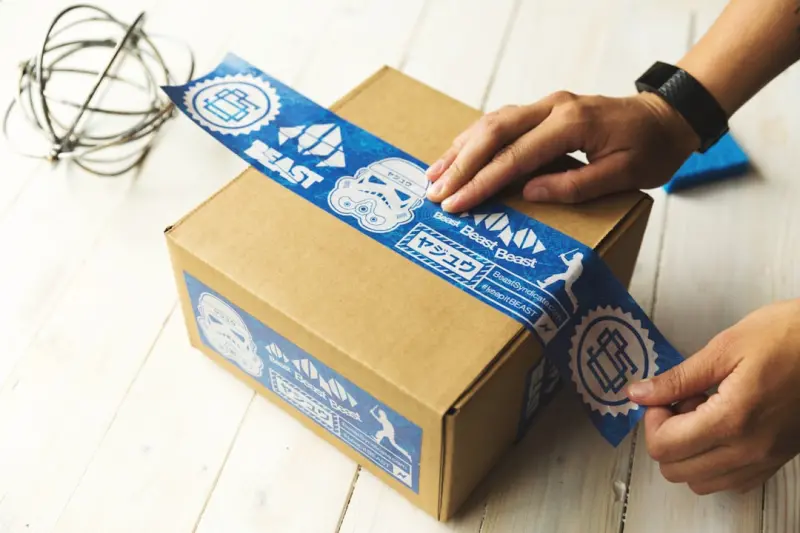
Opening the Box: A Moment That Shapes Young Minds
There’s a magic that crackles the instant a child’s fingers pry open a new toy. It’s not just the glitter of plastic or the promise of a familiar character – it’s the anticipation that fuels the brain’s reward circuitry. As someone who grew up swapping surprise eggs on the schoolyard and now watches my own children’s eyes widen at each new unboxing, I’ve started to wonder: what exactly is happening in that fleeting moment, and how can we harness it to support deeper learning?
The Science of Surprise
Neuroscientists call the brain’s response to novelty a dopamine surge. When a child encounters an unexpected element – a hidden compartment, a pop‑up mechanism, or a secret message tucked inside a packaging flap – the brain releases dopamine, reinforcing the behavior and making the experience memorable. This isn’t just feel‑good chemistry; it’s a catalyst for neural plasticity, the brain’s ability to form new connections.
Research shows that when children are engaged in activities that involve prediction, discovery, and problem‑solving, they develop stronger executive functions – the mental skills that help with planning, focus, and impulse control. The simple act of pulling back a sticker‑covered seal, feeling the resistance of a magnetic closure, or shaking a box to hear the rattle inside triggers a cascade of sensory input that the brain must interpret, categorize, and respond to.
Why Unboxing Beats Passive Play
Traditional play often follows a linear path: pick up a toy, push a button, watch the light flash. While that has its place, the unboxing ritual adds a layer of narrative before the actual play even begins. The child becomes the hero of a short story – the quest for the hidden treasure.
Unlike screen time, where the narrative is handed to the child, unboxing invites them to co‑create the storyline. They decide whether to open the top first, to shake the box, or to peek through a transparent window. Each decision is a micro‑choice that builds confidence and a sense of agency.
Design Elements That Turn a Box into a Learning Tool
Not all packaging is created equal. Some brands have begun to think like educators, embedding subtle challenges that encourage critical thinking:
- Layered Seals: Multiple layers that require different actions – a peel‑away sticker, a magnetic flap, a pull‑tab – teach sequencing and fine‑motor skills.
- Hidden Clues: A QR code or a puzzle printed on the inside of the lid that leads to a simple riddle. Solving it rewards the child with a bonus accessory, reinforcing problem‑solving.
- Material Variety: Combining cardboard, soft foam, and textured plastic stimulates tactile exploration and haptic discrimination.
- Sound Cues: A gentle crinkle or a subtle click can signal progress, helping children associate cause and effect.
When these elements are thoughtfully integrated, the packaging becomes an interactive learning module rather than a mere container.
From Unboxing to Extended Play
What happens after the lid is lifted is equally important. The excitement generated by the reveal can be channeled into deeper engagement with the toy itself. For instance, a construction set that arrives in separate compartments encourages kids to sort pieces before building, a habit that mirrors the scientific method: observation, classification, hypothesis.
Brands that provide a interactive content engine on their websites – think digital storybooks that continue the unboxing narrative – create a seamless transition from physical to digital, reinforcing the concepts introduced during the reveal.
Unboxing as a Social Experience
In today’s hyper‑connected world, children often share their unboxing moments on platforms like TikTok or Instagram. While many parents worry about screen exposure, this sharing can be reframed as a collaborative learning activity. When kids explain what they see, describe textures, or predict what’s inside, they practice language skills and narrative competence.
Moreover, peer feedback – “Wow, that’s cool!” or “Did you find the secret compartment?” – adds a social dimension that deepens comprehension. The act of teaching others what they discovered strengthens their own understanding, a principle known as the “protégé effect.”
Balancing Excitement with Sustainability
One criticism of surprise packaging is its environmental impact. As a parent conscious of waste, I’ve started looking for brands that use recyclable or biodegradable materials without sacrificing the tactile thrill. The challenge lies in maintaining the sensory richness that fuels curiosity while reducing single‑use plastics.
Innovative solutions include:
- Reusable Boxes: Sturdy tins or cloth pouches that can be repurposed for storage or travel.
- Plant‑Based Inks: Non‑toxic, compostable printing that still offers vibrant visuals.
- Modular Inserts: Interlocking cardboard pieces that can be assembled into a new toy after the original is removed.
When sustainability is baked into the design, children also learn valuable lessons about stewardship and responsibility.
Case Study: The “Mystery Mini‑World” Collection
One recent line that struck a chord with my own kids is the “Mystery Mini‑World” series. Each set arrives in a compact box with a series of sealed chambers, each requiring a different opening technique. Inside, the toys are tiny diorama pieces that can be arranged to form a bustling city, a jungle, or an underwater realm.
What makes this line stand out is the intentional “learning ladder” built into the packaging:
- Discovery Phase: Children identify which seal to open first, practicing decision‑making.
- Manipulation Phase: They handle delicate pieces, refining fine‑motor control.
- Construction Phase: The assembled diorama encourages spatial reasoning and storytelling.
Parents report that children spend more time in open‑ended play after the unboxing, weaving narratives that go beyond the original theme. This aligns with findings from story‑centric toys that emphasize imagination over passive consumption.
Practical Tips for Parents Who Want to Leverage Unboxing
Here are a few strategies to turn every unboxing into a developmental win:
- Slow Down the Reveal: Encourage your child to pause before ripping open a seal. Ask, “What do you think is underneath?” This promotes hypothesis testing.
- Document the Process: Take a short video or draw a quick sketch of the packaging stages. Later, discuss what was surprising and why.
- Extend the Narrative: After the toy is out, ask your child to invent a backstory for the object. This deepens language skills and creativity.
- Recycle Creatively: Turn the empty box into a storage container or a craft project, reinforcing environmental values.
- Mix Media: Pair the physical toy with a digital companion – an app that offers a mini‑game related to the unboxing story, reinforcing concepts through multiple modalities.
Looking Ahead: The Future of Playful Packaging
As technology advances, we’ll likely see more hybrid experiences: augmented reality (AR) layers that unlock when a child points a tablet at a specific part of the box, or smart packaging that emits gentle scents to enhance sensory immersion. The core principle, however, remains timeless – surprise sparks curiosity, and curiosity fuels learning.
Designers, educators, and parents all have a role to play. By treating the box as the first chapter of a story rather than a disposable wrapper, we can create a continuous learning journey that starts the moment a child lifts a flap and ends long after the toy is put away.

Related Posts
The Toy Renaissance: How Smart, Sustainable Play Is Redefining the Market in 2024
Ryan Stuart dives into the 2024 toy renaissance, revealing how smart tech, sustainability, and commu... Read More
Miniature Craft Toy Kits: Tiny Joys for Big Stress Relief
Discover the calming power of miniature craft toy kits. From sensory benefits to intergenerational b... Read More
The Timeless Magic of Physical Toys in a Screen-Driven World
Physical toys still hold the key to imagination, language growth, and family connection in a digital... Read More
Top Posts
Micro‑Community Mastery: AI‑Powered Social Ads That Talk, Convert, and Scale
Learn a fresh, data‑first approach to social media advertising that focuses on hyper‑targeted micro‑communities, AI‑generated creative, and conversation...Read More

How to Turn Your LinkedIn Profile into a Search Engine Magnet
Learn how to leverage LinkedIn’s algorithm, craft keyword‑rich headlines, and publish articles that rank in Google, turning your profile into a traffic‑ge...Read More

Schema‑Driven WordPress SEO: Turning Data Into Clicks
Learn a step‑by‑step, data‑first approach to adding schema markup on WordPress, turning ordinary pages into rich snippets that attract clicks, improve CTR...Read More

Hyperlocal SEO: Turning Neighborhood Moments into Search Power
Learn fresh hyperlocal SEO tactics that turn community events, micro‑influencer partnerships, and voice searches into powerful rankings and real‑world foot ...Read More
0 Comments
Post Comment
You will need to Login or Register to comment on this post!