
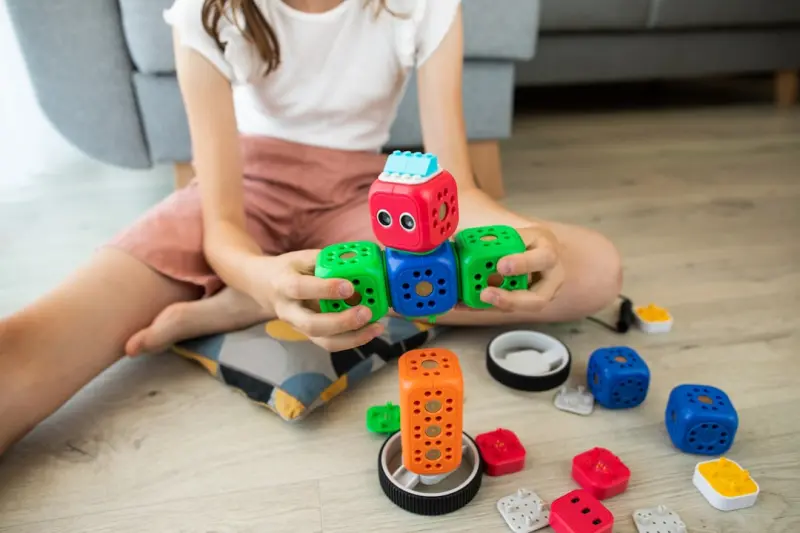
The Hybrid Toy Revolution: When Play Gets Smart
When I was a kid, my most prized possession was a plastic dinosaur that roared at the press of a button. Fast‑forward a few decades, and that same roar could be triggered by a cloud‑based AI that learns my child’s favorite sounds and adapts its behavior in real time. This isn’t science‑fiction; it’s the new reality of hybrid toys—physical objects that seamlessly blend with digital ecosystems. In this post, I’ll walk you through why these smart playthings are more than a novelty, how they’re reshaping the way children (and adults) learn, and what this means for parents, educators, and the industry at large.
From Tangible to Tangible‑Plus: Defining the Hybrid Toy
A hybrid toy is any physical product that gains a digital layer of interaction—think of a plush bear that talks to you through an app, a building block set that unlocks virtual worlds, or a board game that records scores on a cloud dashboard. The key distinction from “electronic toys” is the two‑way dialogue: the child influences the digital experience, and the digital side feeds back into the physical play. This feedback loop creates a richer, more personalized play session that can evolve over weeks, months, or even years.
Why Parents Are Paying Attention
Modern parents are juggling work, remote schooling, and the endless quest for screen‑time balance. Hybrid toys offer a middle ground—an engaging physical object that also satisfies the tech‑savvy expectations of today’s kids. They encourage hands‑on manipulation while still providing the instant gratification of a video game. Moreover, many of these toys come equipped with parental controls, usage analytics, and educational milestones, turning playtime into a data‑informed learning experience without the guilt of “just another screen.”
Educational Benefits Backed by Science
Research in developmental psychology consistently shows that active play—where children manipulate objects, experiment, and receive immediate feedback—boosts problem‑solving skills, spatial reasoning, and language development. Hybrid toys amplify these benefits by:
- Providing adaptive challenges that scale with a child’s skill level, keeping them in the “zone of proximal development.”
- Offering multimodal feedback—visual, auditory, and haptic— which reinforces learning pathways.
- Enabling collaborative play across distances, allowing kids to build, trade, or compete with friends worldwide.
When the physical and digital worlds reinforce each other, the learning gains multiply.
Designing for Safety and Privacy
One of the biggest concerns surrounding connected toys is data privacy. Reputable manufacturers are now adopting privacy‑by‑design principles: minimal data collection, on‑device processing, and transparent consent flows. As a consumer, look for toys that:
- Provide clear, jargon‑free privacy policies.
- Allow you to delete a child’s data on demand.
- Use encrypted communication between the toy and its companion app.
By demanding these standards, we push the entire industry toward safer, more trustworthy products.
From Playroom to Classroom: Hybrid Toys in Education
Educators are quick to adopt tools that make abstract concepts concrete. A set of magnetic tiles that syncs with a tablet can illustrate geometry, while a programmable robot can teach basic coding logic. The beauty lies in the seamless transition from free play to structured learning: the same toy that fuels imagination at home can be repurposed for lesson plans without additional hardware.
Economic Implications: A Booming Market
The global market for connected toys is projected to grow at double‑digit rates over the next few years. This surge is driven by three forces:
- Consumer demand for experiences that blend the tactile and the virtual.
- Technological advances in low‑power Bluetooth, AI edge computing, and affordable sensors.
- Retail innovation—brands are offering subscription models that deliver new digital content updates to keep the toy “fresh.”
For startups, this landscape presents a low barrier to entry: a simple physical prototype paired with a cloud service can become a viable product in months rather than years.
Case Study: A Classic Board Game Gets a Digital Makeover
One of my favorite childhood games was a simple strategy board that taught resource management. A modern iteration introduced an app that tracks each player’s moves, suggests tactical hints, and even creates custom scenarios based on the group’s skill level. The result? A 30% increase in repeat play and a new revenue stream from downloadable scenario packs.
What’s fascinating is how the digital overlay didn’t replace the board—it enhanced it. The tactile satisfaction of moving pieces remained, while the app added depth that kept older players engaged.
Building a Hybrid Toy: Key Technical Pillars
If you’re a maker or a product team eyeing this space, focus on three technical foundations:
- Low‑Latency Connectivity: Bluetooth Low Energy (BLE) is the de‑facto standard for maintaining a responsive link without draining batteries.
- Edge AI: On‑device machine learning enables toys to recognize voices, gestures, or patterns locally, preserving privacy and reducing latency.
- Modular Software Architecture: Separate the physical firmware from the cloud services via well‑defined APIs. This separation lets you iterate on the digital experience without recalling hardware.
For a deeper dive into the importance of modular architecture in digital products, check out learn more about modular design principles.
Community and Co‑Creation: The Power of User‑Generated Content
Hybrid toys thrive when users can extend them. Whether it’s designing new skins, crafting custom storylines, or sharing achievements on social platforms, user‑generated content fuels a virtuous cycle of engagement. Companies that provide easy‑to‑use creation tools often see higher retention rates because players feel ownership over the ecosystem.
Interestingly, the same philosophy that drives community‑centric growth in SaaS applies here. If you’re curious about how community challenges can sustain engagement, you might find insights in exploring data‑driven community strategies.
Future Trends: What’s Next for Hybrid Play?
Looking ahead, expect three emerging trends to shape the next wave of smart toys:
- Mixed Reality Integration: AR lenses and projection mapping will allow physical toys to morph into immersive experiences without extra hardware.
- Eco‑Friendly Materials: As sustainability becomes a core consumer value, manufacturers will pair biodegradable plastics with recyclable electronics.
- Emotion‑Sensing AI: Sensors that detect a child’s mood through voice tone or facial expression will enable toys to respond empathetically, fostering emotional intelligence.
These innovations promise not just more fun, but a deeper alignment with the developmental needs of children growing up in an increasingly digital world.
Closing Thoughts: Play as a Platform
Hybrid toys are turning play into a platform—one that can host learning, creativity, social connection, and even entrepreneurship. By embracing the blend of tactile and digital, we give the next generation tools that adapt, grow, and evolve alongside them. As a parent, educator, or entrepreneur, the question isn’t “should we adopt hybrid toys?” but “how can we harness their potential to enrich lives while keeping safety and privacy at the forefront?” The answer lies in thoughtful design, community involvement, and an unwavering focus on the child’s joy.

Jimmy Anand is a content creator that gets inspired by many aspects of life, internet or whatever inspires him at that moment. When he's not online he's gaming and when he is not gaming he is online trolling discussion boards.
Related Posts
The Playful Power of DIY Tech Toys: Shaping Tomorrow’s Creators
Discover how DIY tech toys turn play into powerful learning, fostering creativity, confidence, and c... Read More

The Play‑First Revolution: Why Tangible Toys Are Outpacing Screens
A deep dive into the rising trend of play‑first toys—modular building systems, analog coding kit... Read More

Unlocking Adult Imagination: How Story‑Driven Toys Transform Play
Adult play isn’t a relic—story‑driven toys spark imagination, sharpen focus, and bring joy to ... Read More
Top Posts

The Evolution of Content Marketing: How to Stay Ahead in a Changing Landscape
The content marketing landscape is constantly evolving. Learn how to stay ahead of the curve and adapt to the changing landscape with the latest trends and best...Read More

WordPress SEO in 2024: Mei Chen’s Human‑Centric Playbook for Ranking Success
Mei Chen shares her proven WordPress SEO playbook for 2024, covering technical basics, smart plugin choices, content silos, and future‑ready tactics to domina...Read More

Future‑Proofing WordPress SEO with AI Audits & Topic Clusters
Discover how to combine AI content audits, custom taxonomy, and Gutenberg block patterns into a powerful topic‑cluster strategy that future‑proofs your Word...Read More

Zero‑Click Search: Turning Snippets Into Traffic Gold
Explore a fresh SEO strategy that harnesses zero‑click results—featured snippets, knowledge panels, and image packs—to drive traffic and authority without...Read More
0 Comments
Post Comment
You will need to Login or Register to comment on this post!